
Wargames rarely give you a perfect army or a simple path to victory.
Instead, they place you in command of exhausted troops, fragile supply lines, incomplete intelligence, and plans that may collapse as soon as the fighting begins.
The best wargames on PC in 2026 cover a wide range of conflicts and command styles, from ancient formations and World War II dogfights to Cold War tank battles and modern geopolitical warfare.
This list focuses on newer releases, actively supported games, and upcoming titles worth following. It includes turn-based tactics, real-time combat, strategic campaigns, naval warfare, and large military simulations.
Let’s get into it!
Quick Recommendations
| Game | Best for |
|---|---|
| Battleplan | Large-scale World War II command |
| Systemic War | Modern geopolitics and real-time battles |
| The Last General | Massive procedural modern warfare |
| Strategic Mind: Spirit of Liberty | Turn-based World War II campaigns |
| Strategic Command: American Civil War | Full-war strategic planning |
| Strategos | Large ancient battles |
| Scramble: Battle of Britain | Simultaneous-turn air combat |
| Second Front | Detailed World War II scenarios |
| Headquarters: World War II | Accessible turn-based tactics |
| Battleship Command | First-person naval command |
| The Troop | Platoon-level Normandy combat |
| Regiments | Cold War combined-arms warfare |
| Task Force Admiral | Pacific carrier operations |
| WARNO | Large-scale Cold War warfare |
Join the Insider List.
Get finished gameplay reveals, development updates, and early notice when the polished demo is ready.
No spam. Unsubscribe anytime.14. Battleplan
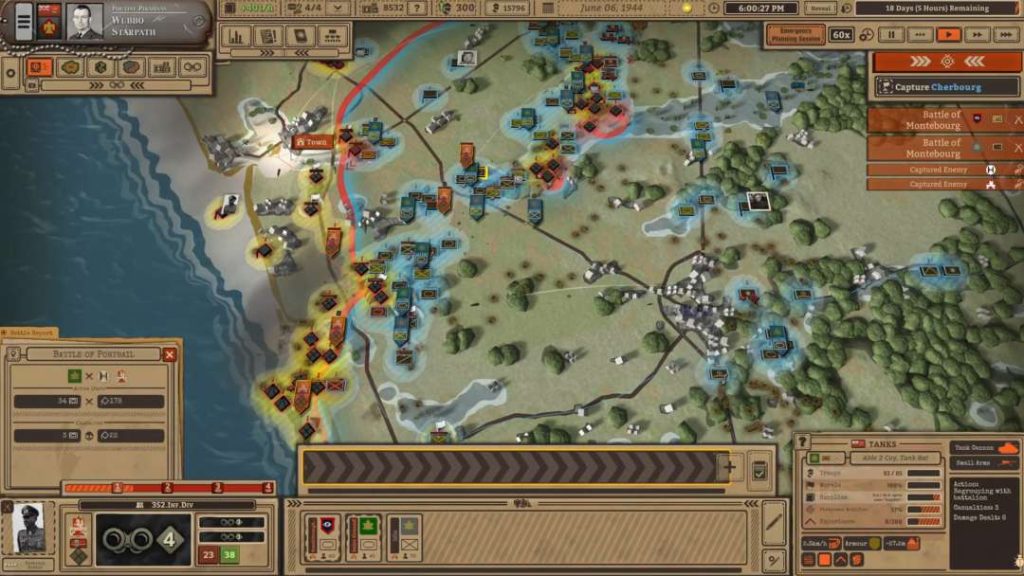
Battleplan is an upcoming World War II strategy game that places you in command of entire divisions rather than individual squads.
You draw orders directly onto the map, then watch headquarters, battalions, and companies interpret those instructions. You decide where the offensive should go, but your subordinate officers determine how their units reach the objective.
Battles can involve hundreds of thousands of soldiers and continue for several weeks of simulated time. Roads, forests, towns, swamps, and elevation all affect how quickly formations move and how easily they can be supplied.
Players can organize artillery bombardments, counterattacks, layered defenses, withdrawals, and attacks across several objectives. Supply is central, since even a successful armored breakthrough can fail when enemy forces cut the roads behind it.
Battleplan is currently planned for the third quarter of 2026.
Best for: Players who want to think like a general without controlling every squad.
13. Systemic War
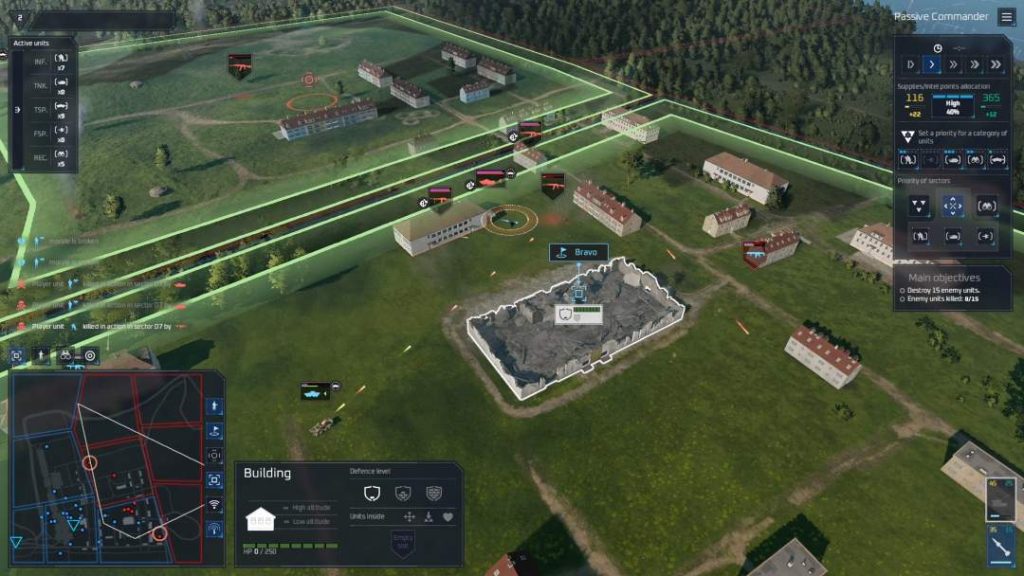
Systemic War combines modern grand strategy with direct real-time battles.
The campaign covers the period from 2008 to 2025 and lets you control a contemporary nation. You manage diplomacy, infrastructure, industry, currency value, interest rates, military strength, and your position within the global economy.
The strategic map uses real cities, roads, and railways instead of simple provinces. This makes logistics and transportation an important part of both economic planning and military operations.
When political pressure turns into war, major conflicts can shift into real-time battles set around locations such as Warsaw, Taiwan, Aleppo, and Hostomel.
The current plan includes more than 25 battlefields and over 150 modern units. Drones, electronic warfare, helicopters, reconnaissance systems, and air defenses can all affect the outcome.
Systemic War is currently planned for the fourth quarter of 2026.
Best for: Players who want modern politics, economics, and direct combat in one game.
12. The Last General
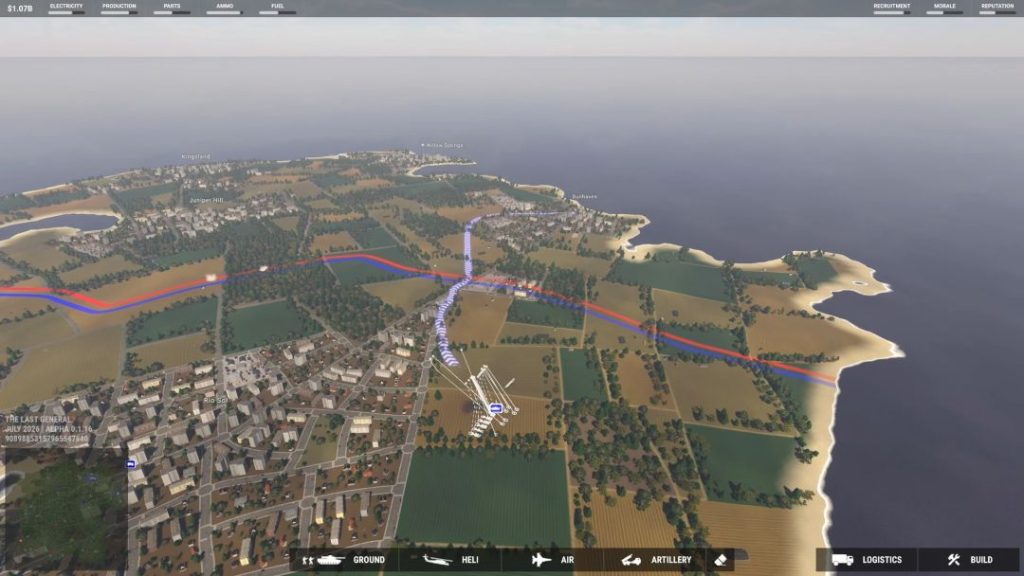
The Last General is an upcoming military strategy game built around enormous procedurally generated battlefields.
Some maps can cover up to 400 square kilometers and contain dozens of towns, cities, factories, and important defensive positions.
You issue high-level orders directly on the terrain, then watch individual companies coordinate their movements. The goal is to command a war rather than manually control every vehicle and infantry unit.
Winning battles is only one part of the campaign. You must capture resources, defend infrastructure, build factories, produce military equipment, and maintain the logistics needed to keep your forces moving.
Strategic options may include cutting electricity, attacking industrial targets, rushing the enemy capital, or weakening production before beginning a major offensive.
You can also leave the command view and directly control a soldier or vehicle inside the battle.
The Last General is currently planned for release in 2027, making it a title to follow throughout 2026.
Best for: Players interested in very large modern wars with strategic production and direct battlefield control.
11. Strategic Mind: Spirit of Liberty
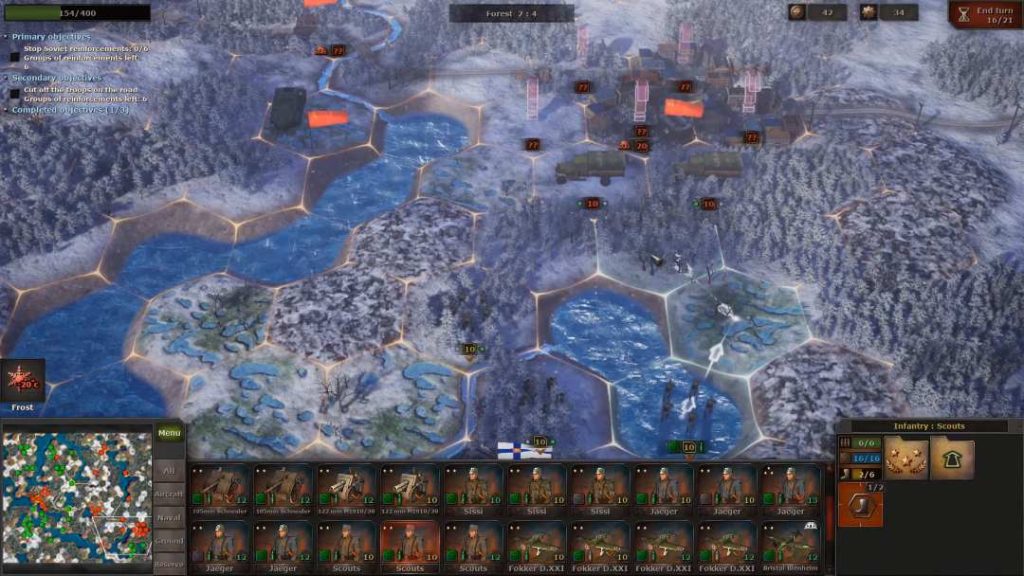
Strategic Mind: Spirit of Liberty is a turn-based World War II wargame focused on Finland.
The campaign covers the Winter War, Continuation War, and Lapland War, offering a less familiar perspective than the American, German, or Soviet campaigns seen in many World War II games.
Your forces can include infantry, artillery, tanks, reconnaissance vehicles, armored trains, anti-tank weapons, aircraft, and captured enemy equipment.
Units gain skills and can receive different weapons as the campaign progresses. Experienced formations become extremely valuable, making unnecessary casualties much more damaging than simply losing a basic unit.
The main campaign follows major Finnish operations between 1939 and 1945. An alternate-history route also includes larger battles involving locations such as Leningrad and Murmansk.
Its mix of hex-based combat, unit progression, and a rarely covered front helps it stand apart from other World War II strategy games.
Best for: Players who enjoy turn-based campaigns, persistent units, and alternate military history.
10. Strategic Command: American Civil War
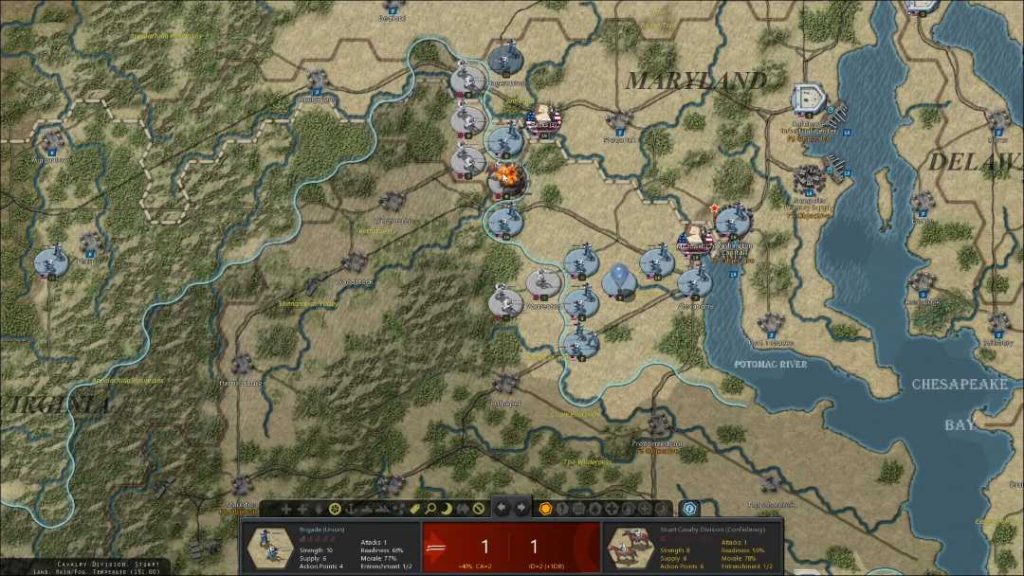
Strategic Command: American Civil War places the entire conflict under your control.
You can lead either the Union or the Confederacy while managing armies, production, research, recruitment, diplomacy, and national policy.
The campaign takes place on a huge 66,000-hex map covering North America from Canada and New Mexico to the Caribbean.
Both sides begin with inexperienced volunteers who must gradually be organized into brigades, divisions, and corps. Famous commanders such as Grant, Lee, Sherman, Jackson, and McClellan can then be assigned to the most important armies.
Rivers act as transportation routes and active battlefields. Gunboats, ports, amphibious attacks, and ironclad warships can affect campaigns far from the main land fronts.
The game includes six campaigns, alternate-history outcomes, and a built-in editor.
Best for: Players who want to manage the American Civil War at the highest strategic level.
9. Strategos
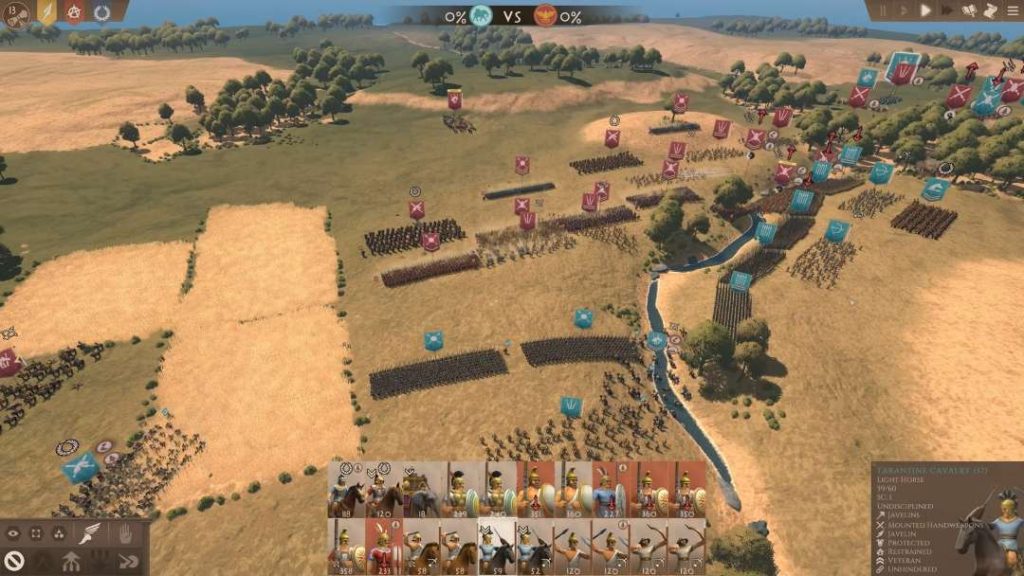
Strategos is a real-time tactics wargame focused on classical antiquity.
It supports battles with thousands of soldiers drawn from more than 120 factions and over 250 unit types. Its armies cover almost one thousand years, from the Persian Wars through the rise of Rome and the Sasanian Empire.
Battles are not based on perfect control. Units can become disorganized, chase retreating enemies, evade attacks, break after morale shocks, or act in ways you did not fully intend.
Generals must remain close enough to issue orders, send couriers, support morale, and influence nearby formations. Their position can be just as important as the strength of the troops they command.
Terrain, fog of war, flanking, command delays, and formation cohesion all shape the battle.
This RTS game includes historical campaigns, reenactment scenarios, map-based campaigns, and custom battle tools.
Best for: Players who want ancient warfare to feel unpredictable and difficult to control.
8. Scramble: Battle of Britain
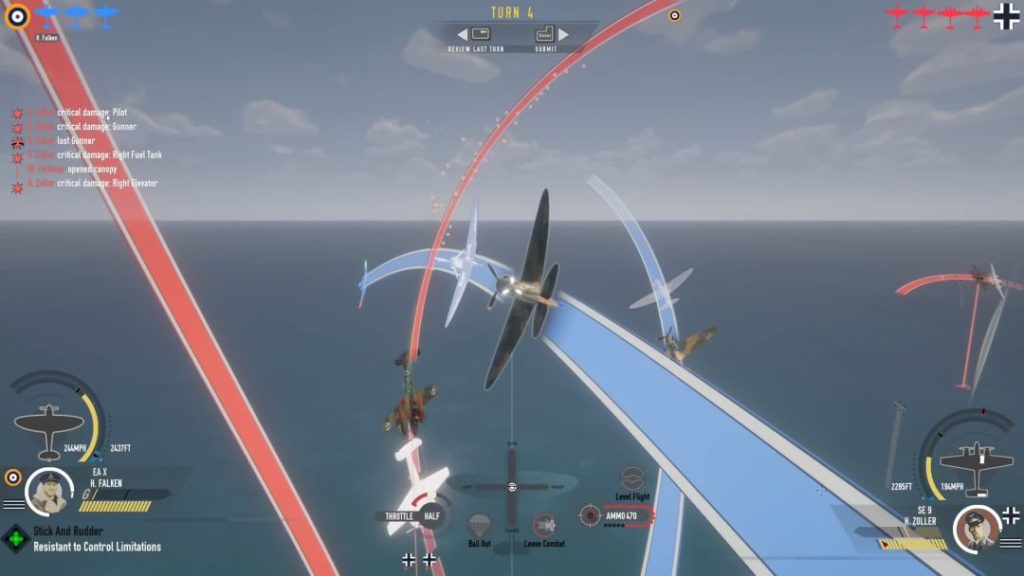
Scramble: Battle of Britain turns World War II dogfights into a simultaneous-turn tactics game.
You command RAF or Luftwaffe aircraft fighting above Britain and the English Channel in 1940.
Each turn is divided into planning, simulation, and review. During the planning phase, you set the movement of every aircraft using dives, loops, rolls, and changes in direction.
Both sides’ orders then play out at the same time in a short burst of real-time action.
After the sequence ends, you can rewind the engagement, inspect damage, and see exactly how each maneuver affected the dogfight.
The Squadron Leader mode follows twelve RAF pilots over thirty days. Individual traits, fatigue, injuries, and permanent deaths affect the condition of your squadron.
Scramble remains in Early Access, but its unusual turn structure already makes it one of the most distinctive air-combat games on PC.
Best for: Players who enjoy careful planning, aircraft management, and simultaneous turns.
7. Second Front
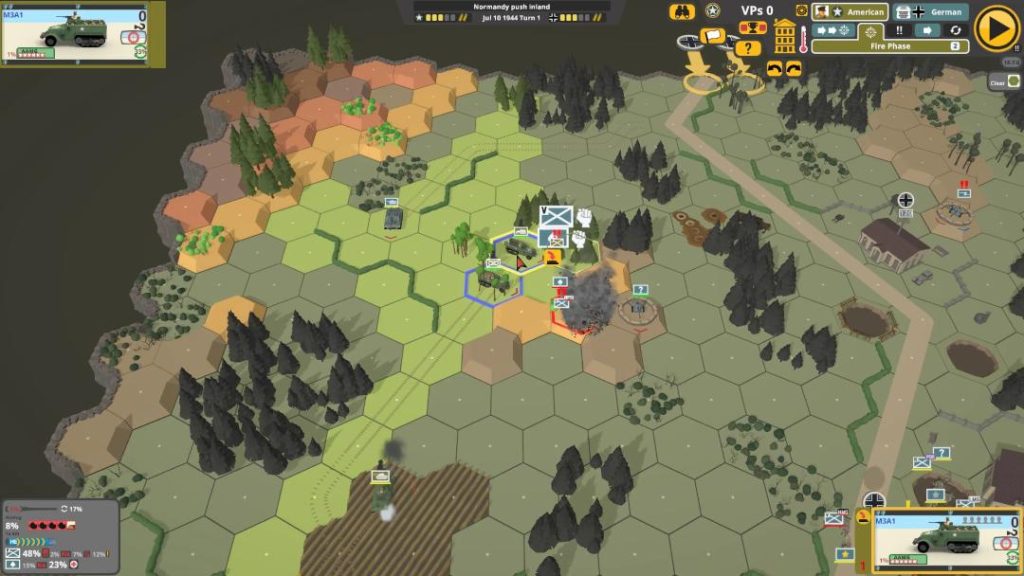
Second Front adapts detailed World War II board-wargame systems into a three-dimensional tactical battlefield.
The game includes 48 official scenarios set around locations such as Stalingrad, Borisov, and Korostychiv.
Players can command American, German, or Soviet forces, with more than 40 infantry types and 216 tanks, vehicles, guns, and other weapons available.
Armor direction, ammunition, fatigue, morale, terrain, and line of sight all matter. Buildings can burn or collapse, bridges can become vital objectives, and different terrain types require different tactics.
The miniature-like presentation may appear simple at first, but the underlying rules are highly detailed.
Second Front also includes map, scenario, and campaign editors. Player-made battles can be shared through the Steam Workshop, giving the game a large amount of additional content.
Best for: Players who want a detailed tactical sandbox with strong community support.
6. Headquarters: World War II
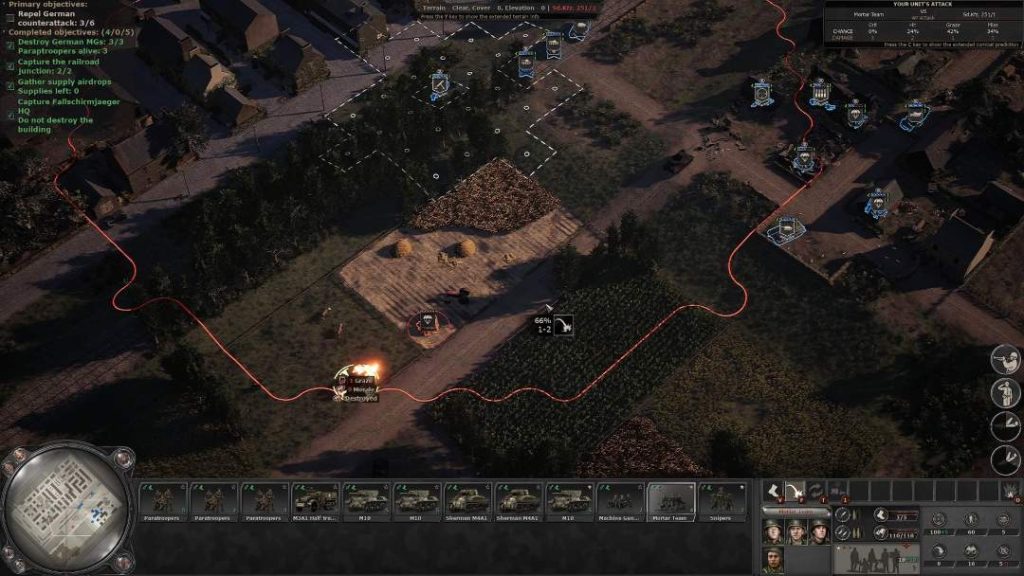
Headquarters: World War II offers fast, readable turn-based battles set during the Normandy campaign.
It includes separate American, British, and German campaigns, with nine operations available for each faction.
The battlefield rules are easy to understand visually, but positioning is still critical. Vehicles have different armor values on their front, sides, rear, and top, which makes flanking one of the best methods for defeating stronger tanks.
Fences and other obstacles provide directional cover. Elevation affects visibility, while damaged buildings and destroyed vehicles can create new defensive positions.
Individual crew members also matter. Losing a driver, gunner, or another specialist gives that unit a specific penalty rather than simply reducing its health.
Surviving units can gain experience, receive upgrades, and be assigned heroes between missions.
Best for: Players looking for an approachable entry into detailed turn-based World War II tactics.
5. Battleship Command
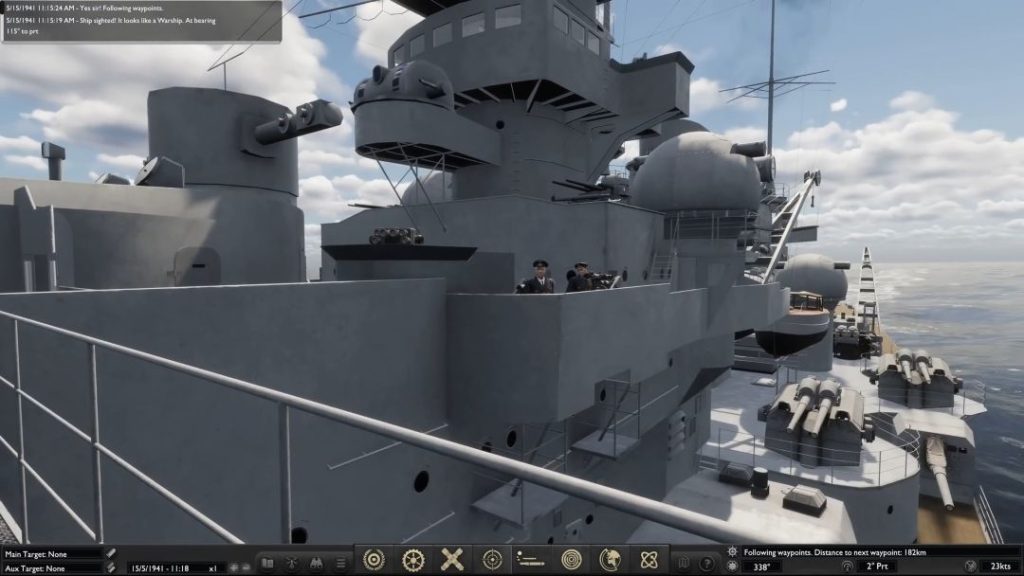
Battleship Command puts you aboard the German battleship Scharnhorst.
Instead of observing the ship only from a distant strategy view, you can walk through its decks and control rooms in first person.
You can issue orders to the crew or personally operate major systems such as naval guns, radar, navigation, and damage control.
The simulation includes armor damage, flooding, fire control, weather, fog, lighting, and a full day-and-night cycle.
Missions may involve hunting merchant convoys, attacking Allied supply routes, or fighting enemy warships across the Atlantic, Norwegian Sea, and Mediterranean.
Changing visibility makes detection and target identification critical. Firing first can be decisive, but revealing your position at the wrong moment may place the entire ship at risk.
The current Early Access version includes tutorials, individual missions, and a scenario editor, while a broader campaign is planned.
Best for: Players who want a physical, first-person approach to naval command.
4. The Troop
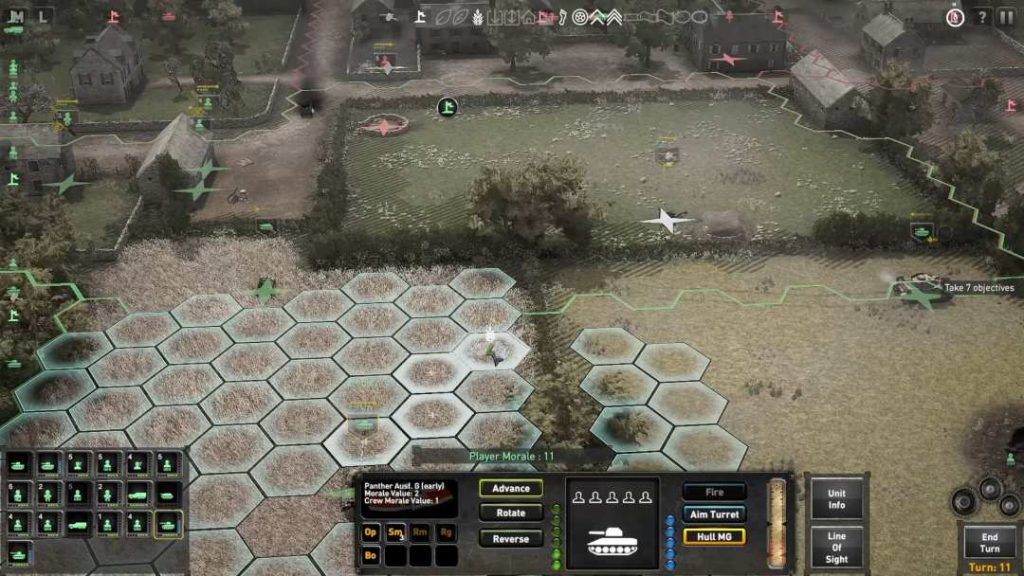
The Troop is a platoon-level turn-based wargame set between D-Day and the fighting around Falaise.
You command British, Canadian, or German forces across more than 30 maps, with story missions, skirmishes, persistent campaigns, and randomized Battlegroup operations.
The game gives players direct control over battlefield decisions. Tanks do not expose weaker armor without orders, hidden guns do not fire automatically, and infantry do not leave positions because of unseen scripted events.
This makes each successful ambush feel earned, while tactical mistakes remain clearly connected to your own decisions.
The artificial intelligence follows the same rules as the player and does not receive hidden information about your troops. It can also change its positions and behavior between attempts, making repeated missions less predictable.
Surviving units gain experience, while formations destroyed during longer campaigns may be permanently lost.
Best for: Players who want readable strategy game with turn-based combat without hidden AI advantages.
3. Regiments
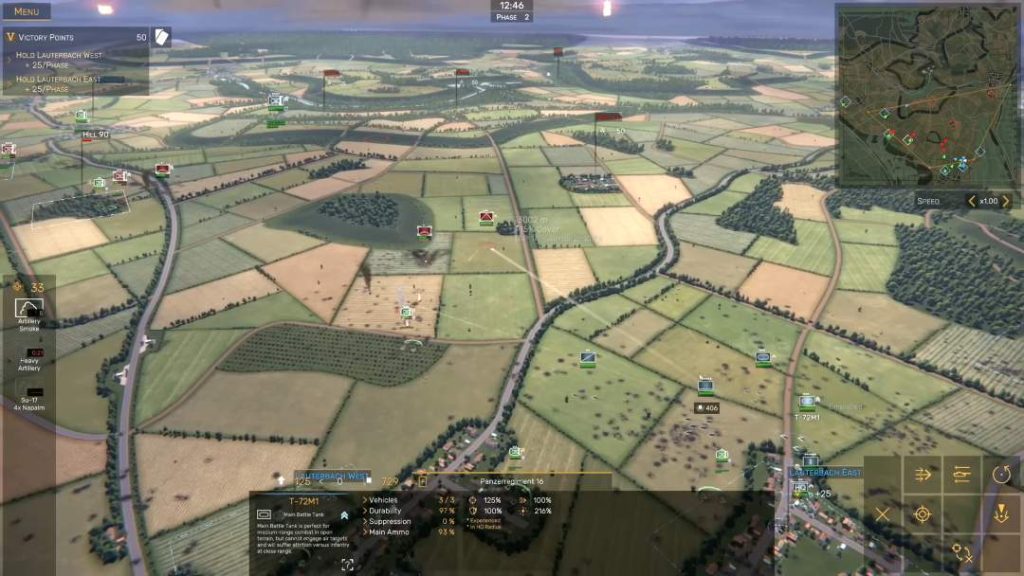
Regiments imagines the Cold War becoming a full conventional war across Germany in 1989.
You command platoons and larger formations in real time without having to control every individual soldier.
Tanks, infantry, artillery, aircraft, reconnaissance, and air defenses must support one another. A strong armored force can still fail if it moves without scouting or protection from enemy aircraft.
Players can organize breakthroughs, counterattacks, mobile defenses, and planned withdrawals. Your main regiment forms the center of the army, while additional task forces provide specialized units and support.
The campaign includes nine multi-stage operations told from several military perspectives.
The Winds of Change expansion added procedurally generated War Paths campaigns, airborne infantry, fighter support, new factions, and more than 70 vehicles and weapons.
A major final update arrived in April 2026 with additional regiments and units.
Best for: Players who want serious combined-arms warfare without excessive unit micromanagement.
2. Task Force Admiral
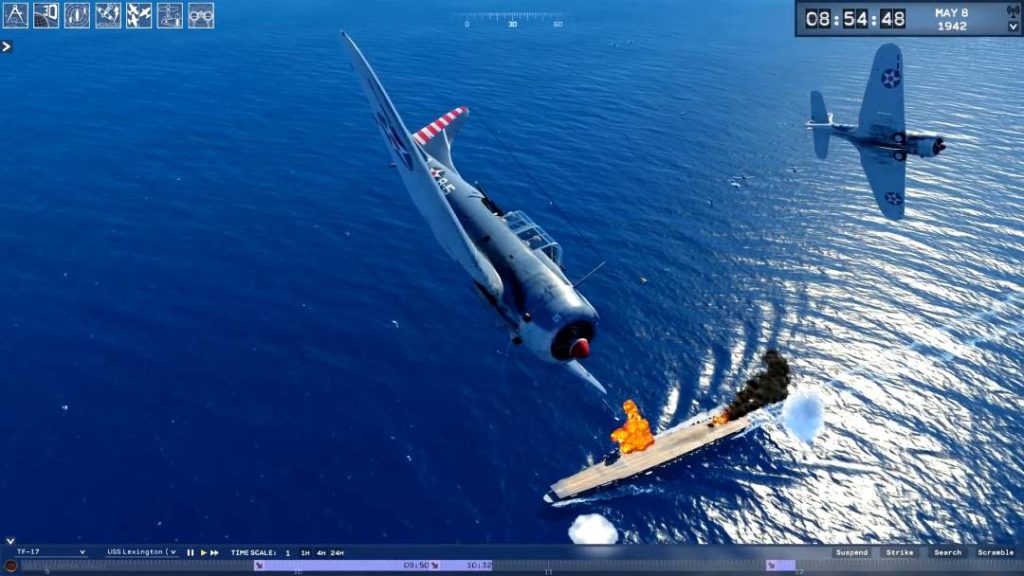
Task Force Admiral places you in command of an American carrier group during the opening year of the Pacific War.
You can observe the battle from a traditional overhead camera or enter a first-person command position inside your flagship.
The game runs in pausable real time, with time compression available during long periods of searching, preparation, and movement.
Carrier warfare depends heavily on information. You must locate the enemy, interpret uncertain reports, organize aircraft, defend your own ships, and decide whether a sighting is important enough to risk an air strike.
The current Early Access version focuses on the Battle of the Coral Sea and the Battle of Midway. It includes four scenarios and semi-random battle generators.
Additional ships, aircraft, campaigns, scenarios, tutorials, and editing tools are planned during development.
Best for: Players fascinated by naval aviation, uncertain intelligence, and Pacific carrier warfare.
1. WARNO
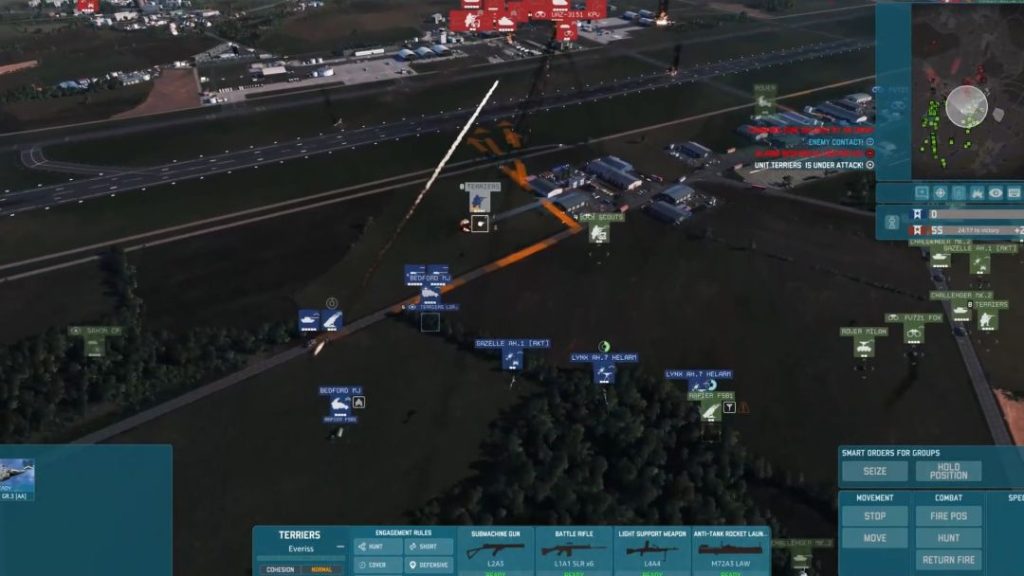
WARNO takes the top spot by combining large-scale Cold War battles with detailed military units and several ways to play.
The setting imagines a conventional war between NATO and the Warsaw Pact in 1989.
You build custom battlegroups containing infantry, reconnaissance vehicles, tanks, artillery, helicopters, mobile air defenses, and strike aircraft.
With more than one thousand military units represented, understanding the role and limitations of each formation is a major part of the game.
A powerful tank can dominate open ground but become vulnerable inside a forest without infantry protection. Attack helicopters can destroy armored groups, but properly positioned air defenses can remove them quickly.
Real-time battles are supported by Army General campaigns, where formations move across a turn-based strategic map before entering tactical combat.
WARNO also includes scripted operations, skirmishes, ranked matches, cooperative play, team battles, and large ten-versus-ten multiplayer conflicts.
Continued expansions and reinforcement packs have made the game much larger in 2026.
Best for: Players who want large Cold War battles, deep unit variety, and both single-player and competitive modes.
Join the Insider List.
Get finished gameplay reveals, development updates, and early notice when the polished demo is ready.
No spam. Unsubscribe anytime.Conclusion
The best wargames in 2026 offer far more than simple battlefield victories.
Some focus on individual tanks, pilots, and ships, while others put entire armies, national economies, and military industries under your control.
WARNO remains the strongest all-around choice for large Cold War battles, while Task Force Admiral and Battleship Command offer uncommon approaches to naval warfare.
If you liked this list, be sure to check out our list of the best grand strategy games.