
Multiplayer strategy games have come a long way from static maps and limited interaction.
But with so many options on the market, it’s hard to tell which games are worth your time, and which are bloated with microtransactions or suffer from shallow mechanics.
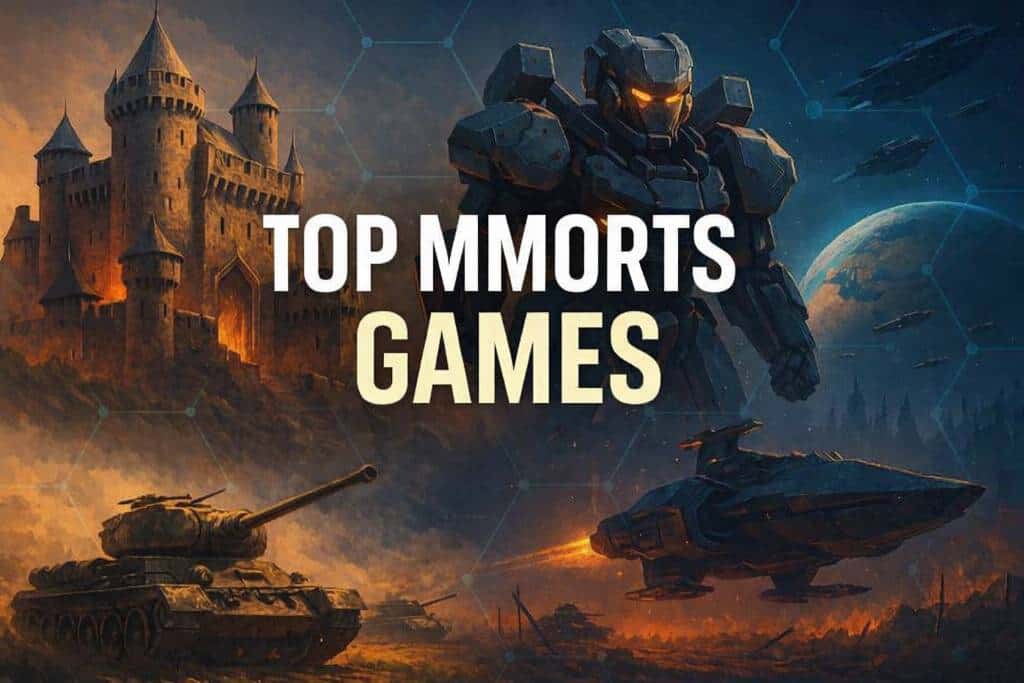
This list breaks down the 10 best MMORTS games into the most important details so you can easily find the one that fits you the best!
We’ve also listed a few indie games that are coming soon, so read till the end!
Join the Insider List.

Get finished gameplay reveals, development updates, and early notice when the polished demo is ready.
No spam. Unsubscribe anytime.What Defines a Great Multiplayer Strategy Game?
A great multiplayer strategy game doesn’t just rely on flashy visuals or fast-paced action. Its strength lies in the depth of decision-making, the balance of risk and reward, and the interaction between players. Several core elements tend to separate memorable strategy games from forgettable ones:
1. Strategic Depth Without Overcomplication
The best games offer layered decision-making that rewards planning, adaptation, and foresight. Players should feel like every move counts, but the learning curve shouldn’t feel like a wall. Simplicity in rules paired with complexity in outcomes is key.
2. Balanced Player Interaction
A multiplayer strategy game thrives on interaction, alliances, betrayals, trades, or direct combat. If player interaction feels shallow or one-dimensional, the long-term appeal fades quickly. Competitive mechanics should encourage involvement rather than passive observation.
3. Fair and Transparent Mechanics
Balance is critical. Whether through carefully tuned units, clear resource systems, or limitations that prevent runaway leaders, players should feel they have a fair shot, and that victory comes from better strategy, not hidden advantages or pay-to-win elements.
4. Replay Value Through Emergent Gameplay
No two matches should feel the same. Great games support a wide range of playstyles, unpredictable outcomes, and evolving meta-games. This often comes from a combination of variable maps, asymmetric factions, or dynamic events.
5. Clear Progression and Meaningful Goals
Players need a reason to come back. Whether it’s ranked competition, long-form campaigns, or evolving alliances in an MMO-style world, persistent and meaningful goals help build long-term communities.
1. Rise of Kingdoms (2018)
Starting our best MMORTS games list with a title you can’t skip in this genre.
| Category | Details |
| Genre & Subtype | Real‑time strategy (RTS), Massively Multiplayer Online RTS (MMORTS) with 4X/city-building elements. |
| Multiplayer Format | PvP, Co‑op, full alliance warfare, team-based and free‑for‑all modes. |
| Real-Time vs Turn-Based | Entirely real‑time battles unfold live on a persistent world map. |
| Match Scale | Massive scale: supports full alliance vs alliance (hundreds to thousands of players), as well as small squad skirmishes. |
| Factions or Loadouts | Multiple historical civilizations (e.g., Rome, China, Britain, Greece), each with unique commanders and unit types. |
| Progression System | Tech tree, commander leveling, city upgrades, alliance research, persistent across matches. |
| Victory Conditions | No fixed match end, victory is open-ended: dominate via military conquest, resource control, flag rallies, or alliance campaigns. |
| Interaction Style | Direct warfare, resource theft, alliance diplomacy, coordinated strategic campaigns. |
| AI Availability | AI-controlled barbarians and NPC fortresses exist, but multiplayer is primarily player-driven; no PvE campaign mode noted. |
| Match Duration | Tactical window: the default rally timer is 5 minutes, but leaders may stretch it to 8 hours when they want to track or shelter troops.Strategic window: a full KvK season lasts ≈ 60 days in Seasons 1–2 and ≈ 50 days in Season 3 and all Season-of-Conquest formats, from Crusader’s Eve to reward distribution. |
| Monetization Model | Free-to-play; heavy emphasis on in-app purchases (VIP levels, speed-ups, packs); widely criticized as pay‑to‑win. |
| Platform | iOS, Android, Windows and macOS (via official PC client); fully cross-platform. |
| Player Base | 50 M+ downloads on Google Play. |
Summary & Observations
- Scale & Immersion: Rise of Kingdoms delivers large-scale real-time strategy on mobile and PC, with persistent worlds and dynamic alliance warfare.
- Strategic Variety: With many civilizations and deep progression systems, its strategic depth supports both casual and hardcore playstyles.
- Accessibility & Monetization: Easy for newcomers to pick up, though long-term progression often nudges players toward spending to stay competitive.
- Community & Longevity: Nearly 8 million monthly players globally indicate a still-thriving ecosystem, despite typical gradual dips.
Ideal for: Fans of mobile MMORTS who enjoy ongoing, alliance-driven gameplay, historical settings, and don’t mind pay-to-progress mechanics.
We’ve prepared some more games like Rise of Kingdoms in case you want to see the alternatives.
2. Call of Dragons (2023)
| Category | Details |
| Genre & Subtype | Real‑time strategy (RTS), MMO‑style fantasy conquest with 4X elements (city-building, territory expansion). |
| Multiplayer Format | PvP, Co‑op (dragon raids up to 80 players), alliance warfare. |
| Real-Time vs Turn-Based | Fully real‑time on a persistent battle map. |
| Match Scale | Massive: alliance-wide campaigns, 80-player raids, plus smaller-scale skirmishes. |
| Factions or Loadouts | Three primary factions: Humans, Elves, Orcs, each with hero selections and unit types with meta-varying roles. |
| Progression System | City upgrading, hero development, alliance research, artifact gathering, persistent season-based progression with resets. |
| Victory Conditions | No fixed end, victory through domination, resource control, winning seasonal campaigns or zone captures. |
| Interaction Style | Direct combat, resource theft, alliance strategy, dragon raids, and seasonal strategic events. |
| AI Availability | Primarily player-driven; dragons and NPC behemoths for raids; no standalone PvE campaign. |
| Match Duration | Ongoing world seasons (weeks); raids last minutes; gameplay is long-term and seasonally cyclical. |
| Monetization Model | Free-to-play with in-app purchases, VIP benefits, speed-ups, hero/artifact packs; competitive edge often tied to spending. |
| Platform | iOS, Android, Windows, macOS (via PC client); full cross-platform support. |
| Player Base | 10 M+ downloads on Google Play. |
Summary & Insights
- Scale & Theme: Call of Dragons offers large-scale fantasy RTS gameplay akin to Rise of Kingdoms, with dragon raids and faction warfare.
- Faction Dynamics: Choice of Humans, Elves, or Orcs deeply impacts strategy, elites are defined by heroes, troops, and artifacts.
- Progression Cycle: Season resets refresh the battlefield, making sustained progression the goal each cycle rather than endless advancement.
- Activity Level: With ~80K recent downloads and moderate Twitch viewership (~50–100 avg daily), the game maintains a steady player base; isn’t a mass hit, but solid niche presence.
- Monetization & Community: Similar to its genre, the game leans heavily on in-app purchases, free-to-play players can progress but may lag behind whales.
Ideal For: Fans of Rise of Kingdoms looking for a refined fantasy setting and competitive seasonal gameplay; players who enjoy intermittent dragon raids and faction-focused macro-strategy.
Rise of Kingdoms and Call of Dragons are also available on mobile. If you’re looking for more mobile game suggestions, check out our list of 10 best turn-based mobile games.
3. Foxhole (2016)
| Category | Details |
| Genre & Subtype | Massively Multiplayer Online action-strategy / Real-time strategy (persistent war sandbox). |
| Multiplayer Format | PvP–focused, fully team-driven, with coordinated logistics, squad combat, and persistent world events; no PvE campaign. |
| Real-Time vs Turn-Based | Fully real-time on a persistent world map with regional warfare and building phases. |
| Match Scale | Massive: persistent war spanning multiple regions, supporting up to ~3,000 concurrent players per world. |
| Factions or Loadouts | Two factions (Colonials vs Wardens); no classes, players self-supply roles (soldier, builder, driver, medic). |
| Progression System | Persistent rank (via commend system), tech tree, resource processing, fortification building; progression is war-based. |
| Victory Conditions | Capture a defined number of regions or victory points across a persistent map to win a war; wars often last weeks. |
| Interaction Style | Direct combat, logistics-driven cooperation, fort-building, convoy operations, and strategic map control. |
| AI Availability | Automated defenses and resource fields are AI-controlled, but core gameplay is fully player-driven; no PvE campaign mode. |
| Match Duration | Recent wars commonly run 3–6 weeks; a few have stretched past seven. Shortening or lengthening this range would add precision. |
| Monetization Model | Premium buy-to-play on PC (Steam); no microtransactions or pay-to-win elements. |
| Platform | Windows only (via Steam). |
| Player Base | According to SteamDB, February 2026 average 6,828 monthly active players, with a peak at 17,704. |
Summary & Insights
- Massive, persistent warfare: Foxhole distinguishes itself with a war that persists across regions, relying heavily on player-run economies and real-time collaboration.
- Player-driven roles: From frontline combat to logistics and base-building, every player shapes outcomes, cooperation is essential.
- High-intensity collaboration: Complex systems demand organized squads and alliances; solo players may struggle unless they join coordinated groups.
- Stable, niche player base: Tens of thousands of owners, with steady peaks of 2–4k daily players. Updates spike interest but retention dips afterward.
- No pay-to-progress monetization: Once purchased, the game offers full access, there are no intentional financial barriers to participation.
Ideal for: Players who enjoy authentic military teamwork, strategic logistics, and long-form persistent wars on PC, without premium monetization distractions.
4. Starborne: Sovereign Space (2016)
| Category | Details |
| Genre & Subtype | MMORTS with strong 4X elements, persistent real-time strategy in a sci-fi space opera setting. |
| Multiplayer Format | Massive PvP focus with alliance play; features two modes, Sovereign Space (4–10 week global campaigns) and Dead Zone (3–4 hour, 25-player skirmishes). |
| Real-Time vs Turn-Based | Fully real-time on a seamlessly persistent map. |
| Match Scale | Up to hundreds per campaign, typically 320–390 players per world in Sovereign Space; Dead Zone is up to ~25 players. |
| Factions or Loadouts | Six core factions (Atlas Syndicate, Frontier Legion, Terran Combine, Mars Prosper League, Tianchao, XAOC). Dead Zone features four alternate factions (Gatos Fritos, Les Apaches, Nightcorps, Surpasum). |
| Progression System | Persistent across campaign: station building, tech via policy cards, fleet composition, resource control; resets post-campaign. |
| Victory Conditions | Three types: Strategic (victory points), Dyson (build the most Dyson Sphere), Territorial (most controlled hexes). |
| Interaction Style | Direct fleet combat, diplomacy within alliances/coalitions, economic/resource focus, espionage via policies and cards. |
| AI Availability | AI present only as NPC elements (solar flares, raiders), but the core gameplay is exclusively PvP/alliance-driven. |
| Match Duration | Sovereign Space runs 4–10 weeks per round; Dead Zone rounds are completed in 3–4 hours. |
| Monetization Model | Free-to-play with premium card packs, faction unlocks and time accelerators available for cash |
| Platform | Windows PC (Steam/official client) only. |
| Player Base | Map supports up to ~5000, though round sizes average 320–390 players; No official player base stats. |
Summary & Insights
- Epic, campaign‑scale play: Rounds last weeks and support hundreds in large-scale strategic warfare and cooperation.
- Depth & complexity: Policy cards, faction mechanics, and alliance diplomacy offer rich tactical and strategic layers.
- Time investment: Not a casual experience, players report needing extensive time to stay relevant.
- Flexible modes: Fast-paced Dead Zone is ideal for quick clashes, while Sovereign Space caters to long-term, immersive campaigns.
- Dedicated niche: Despite limited overall stats, there’s a passionate core audience drawn to its grand-scale and social gameplay.
Ideal for: Strategy gamers who thrive on long-form MMO campaigns, coalition diplomacy, and territorial conquest in space.
5. Stronghold Kingdoms (2012)
| Category | Details |
| Genre & Subtype | MMO Real‑Time Strategy (RTS) with city‑building and castle sieges, blending grand strategy and simulation. |
| Multiplayer Format | Fully PvP-centric with alliance management, castle diplomacy, and siege warfare, more political than combative. |
| Real-Time vs Turn-Based | Entirely real-time; multiplayer maps are persistent worlds with continuous gameplay. |
| Match Scale | Massive persistence: expansive worlds with thousands of players; individual castles interact in alliances and faction dynamics. |
| Factions or Loadouts | Structured into regional kingdoms and houses; players elect liege lords and vassals, roles shape diplomacy & strategic options. |
| Progression System | Persistent economy, research trees (military, trade, popularity), honor/rank, plus micro upgradable tokens. |
| Victory Conditions | No fixed ends, victory via rank promotions, political influence, territory control, or why become king/queen. |
| Interaction Style | Direct sabotage via sieges, resource theft, but includes diplomacy, alliance warfare, elections, and economic gain. |
| AI Availability | AI present only in NPC attacks or random events; core gameplay is player vs. player & diplomacy. |
| Match Duration | Persistent worlds run indefinitely; castle upgrades take hours/days, but daily logins of 15 minutes are viable. |
| Monetization Model | Free-to-play with microtransactions (premiums accelerate queues/research); criticized for occasional pay-to-win elements. |
| Platform | Windows (Steam), macOS, iOS, Android, full cross-platform support since 2015. |
| Player Base | According to SteamDB, February 2026 average 400 monthly active players, with a peak at 591. |
Summary & Insights
- Grand-scale, persistent gameplay: Offers a slow-burn MMO RTS experience, with castles, diplomacy, and long-term planning.
- Political nuance: The feudal system, with elections, vassalage, and alliances, is its centerpiece, dwarfing raw combat.
- Time-friendly yet deep: Daily play sessions of 15+ minutes suffice, but deeper engagement is rewarded through steady progression.
- Enduring niche appeal: While concurrent players number in the hundreds, the game’s longevity and over 5 M registrations show a dedicated community.
- Balanced monetization (with caveats): Microtransactions ease progress but don’t dominate; still, careful balance is needed to avoid competitive imbalance.
Ideal for: Strategy fans who prefer measured pacing, sociopolitical depth, and medieval construction over frantic battles.
6. Call of War (2015)
| Category | Details |
| Genre & Subtype | MMORTS with grand strategy and 4X elements, set in WWII, persistent real-time global conquest. |
| Multiplayer Format | PvP-centric, supports alliances/co‑ops, up to 100 players per map (browser/web, Steam), heavy diplomacy. |
| Real-Time vs Turn-Based | Fully real-time with persistent rounds lasting weeks; unit movement and battles synchronized live. |
| Match Scale | Massive: up to 100 real players per map; rounds conclude via victory‑point threshold or by mutual player agreement when few remain. |
| Factions or Loadouts | Players fight as the country slots available on the chosen map (10–100 slots); every country belongs to one of four Doctrines — Axis, Allies, Comintern, Pan-Asian, which grant passive bonuses. Tech tree offers 120 + distinct units. |
| Progression System | Research trees, buildings and doctrines reset at the start of every round; player level/rank is permanent across rounds and unlocks larger maps and cosmetic medals. |
| Victory Conditions | Victory by reaching victory-point targets (cities conquered) or consensus when only a few players remain; time‑limited rounds. |
| Interaction Style | Direct combat, logistics, resource competition, coalition diplomacy via shared maps/coordination, and use of doctrines for strategy. |
| AI Availability | Empty or inactive nations convert to AI control; neutral AI also handles convoy trade routes. No scripted PvE campaign. |
| Match Duration | Rounds last from days to weeks; individual game sessions range from brief turns to hours, depending on engagement. |
| Monetization Model | Free-to-play with optional premium membership (“Oberkommando”) that accelerates production, allows round creation, queueing; gold usage can impact balance in micro‑transactions. |
| Platform | Runs in any modern browser (Windows, macOS, Linux) and on iOS/Android; a native Windows-only Steam client is also offered. |
| Player Base | According to SteamDB, February 2026 average 323 monthly active players, with a peak at 548. |
Summary & Insights
- Persistent, WWII Grand Strategy: Features real-time, global rounds where up to 100 players shape each map’s outcome via combat or diplomacy.
- Depth & Flexibility: Over 120 historically-inspired units, doctrine research, and alliance mechanics allow varied strategic approaches (e.g., rush, defensive, economic).
- High Engagement Over Time: Rounds span weeks, and active participation or coordination often determines success; casual play also viable through slower progression.
- Balanced Complexity: AI fills gaps when players are absent (~30%), keeping rounds moving, and popularity mechanics influence AI stances and diplomacy.
- Free-to-Play with Paid Enhancements: Optional boosts (like production queueing) improve convenience but don’t lock core gameplay behind paywalls, though monetization can affect speed and round creation.
- Moderate Player Base: A steady niche following with ~300‑400 concurrent Steam players; broader web/mobile community likely raises total active count beyond 10k, though user interest is stable rather than explosive.
Ideal for: Fans of historical grand-strategy, WWII settings, long rounds with diplomacy, and players who value depth and player-driven dynamics over fast-paced action.
7. Supremacy: World War 3 (2018)
| Category | Details |
| Genre & Subtype | Real-time grand-strategy/MMORTS with 4X elements, persistent global warfare in the modern era. |
| Multiplayer Format | PvP-focused; supports alliances/co-ops; up to 100 players per match/map. |
| Real-Time vs Turn-Based | Fully real-time, unit orders unfold on persistent maps, some moves take hours to complete. |
| Match Scale | Massive: up to 128 active players per map (AI fills gaps); rounds span weeks, occasionally extending months. |
| Factions or Loadouts | Players command one of the map’s pre-defined nations (up to 128 slots). Each nation belongs to Western, European, or Eastern doctrine, which changes unit stats and unlock order. The tech tree lists 250 + research items and 100 + distinct units. |
| Progression System | Research, buildings and morale persist only for the current round. Account rank, medals and unlocked seasonal units stay with you between games and open access to specialist maps. |
| Victory Conditions | Win via victory-point threshold (Index of Power), elimination/capitulation, or timeout by consensus. |
| Interaction Style | Direct combat, resource trade, coalition diplomacy, espionage, use of doctrine bonuses. |
| AI Availability | Any empty country starts under AI control, and an inactive player’s nation reverts to AI after two days. No scripted story or PvE campaign. |
| Match Duration | Persistent rounds last 2–8 weeks (up to 6 months); gameplay sessions vary, casual check-ins to multi-hour coordination. |
| Monetization Model | Free-to-play with premium gold currency: boosts (queueing, morale, speeding production); gold can impact parity. |
| Platform | Web browser, Steam (Windows/macOS/Linux), iOS, Android, fully cross-platform. |
| Player Base | According to SteamDB, February 2026 average 555 monthly active players with a peak at 868. |
Summary & Insights
- Deep, long-form grand strategy: Rounds span weeks/months with global scale, enabling intricate planning and evolving power dynamics.
- High realism & strategic planning: Long movement times simulate real logistics; emphasis on infrastructure, research, and supply.
- Strong alliance mechanics: Coalition coordination and diplomacy are critical, breaking as often as binding alliances.
- AI ensures continuity: Even inactive slots are filled, preserving gameplay pace in large rounds.
- Pay-to-progress tension: Gold accelerates production and morale; criticized by players as sometimes unbalancing (see community Reddit feedback)
- Balanced accessibility: Free-to-play core works well, but heavy users may feel compelled to purchase gold for parity during high-stakes matches.
- Niche but stable audience: ~500–1,100 concurrent players on Steam; broader audience across platforms sustains engagement.
Ideal for: Strategy fans who appreciate realistic grand-scale warfare, logistics-heavy gameplay, long-term commitment, and deep diplomatic interplay, willing to navigate the monetization.
8. Iron Order 1919 (2020)
| Category | Details |
| Genre & Subtype | MMORTS / grand-strategy set in an alternate post-WWI dieselpunk world, real‑time, province-based map of Europe where mech warfare defines combat. |
| Multiplayer Format | Player vs player with alliances; match size ranges from 26 to 101 players depending on scenario. |
| Real-Time vs Turn-Based | Fully real-time global campaigns; unit movement, production, and diplomacy happen live. |
| Match Scale | Massive: up to 101 players per round; matches run for weeks or even longer. |
| Factions or Loadouts | Players choose nations based on historical Europe with alterations; tech tree enables mechs, tanks, aircraft, flying fortresses, Titans, etc.. |
| Progression System | Province buildings, research lines and mech upgrades reset at the end of each round. Your account rank, medals and achievements are permanent and unlock higher-level maps. |
| Victory Conditions | Capture majority of provinces or reach victory-point threshold; diplomacy and alliances matter. |
| Interaction Style | Direct combat, strategic logistics, alliance diplomacy, mech and air/sea warfare, backstabbing encouraged. |
| AI Availability | AI fills inactive slots and handles NPC behaviors; core is PvP. |
| Match Duration | Weeks to months; players can play casually (daily check-ins) or invest hours in planning and battles. |
| Monetization Model | Free-to-play with two premium layers: (1) Gold, instant boosts for construction, mobilisation and morale; (2) Premium subscription for queueing and comfort perks. |
| Platform | Browser (Armor Games, etc.), mobile (iOS & Android), Windows/macOS via Steam, cross-platform support. |
| Player Base | Small but active: Steam shows “Mostly Positive” reviews; concurrent player numbers unpublished, some community rounds start every two weeks; niche but engaged. |
Summary & Insights
- Dieselpunk world at scale: Troops, tanks, mechs (even “Titans”) and air/sea units clash over province-based Europa.
- Long-form strategy: Campaigns span weeks, casual play is feasible, but strategic depth demands commitment.
- Diplomacy meets warfare: Alliances, treaties, coalition betrayal, and coordination shape the battlefield as much as brute force.
- Hybrid tech tree: Mix of historical gear and fictional mechs creates diverse tactical possibilities.
- Accessible across devices: Playable in browser, on mobile, or PC, full cross-platform integration.
- Core PvP with AI fill-ins: Matches run consistently thanks to AI handling inactive players and scenarios.
- Monetization is mild: Free-to-play with purchases likely for convenience; no major concern for pay-to-win at launch.
- Niche but dedicated community: Niche appeal with consistent rounds every two weeks; steady engagement from strategic MMO fans.
9. Supremacy 1914 (2009)
The last but not the least in our best MMORTS games list: Supremacy 1914.
| Category | Details |
| Genre & Subtype | MMORTS with WWI grand strategy and 4X elements, persistent, real-time global conquest during WWI. |
| Multiplayer Format | PvP-focused, supports alliances/co-ops; up to 500 players per round/maps |
| Real-Time vs Turn-Based | Fully real-time; movements and battles update live on a persistent map |
| Match Scale | Massive: 30 to 500 players, depending on map; rounds may last weeks to months |
| Factions or Loadouts | Players join one of the pre-defined country slots on the chosen map (10 – 500 slots). Supremacy 1914 fields 13 core unit classes, infantry, cavalry, armoured car, artillery, tank, railgun, etc., with upgrades unlocked via research; no doctrine system exists. |
| Progression System | Round-based: tech research, rank (via power/popularity), resource production persists per round, resets afterward |
| Victory Conditions | Reach target “Index of Power” (victory points) or end by consensus when few remain |
| Interaction Style | Direct military combat, resource competition, coalition diplomacy, espionage |
| AI Availability | Unclaimed countries start as AI; inactive players revert to AI control after two days. No scripted PvE campaign. |
| Match Duration | Rounds last 2–8 weeks (up to 6 months on large maps) |
| Monetization Model | Free-to-play with optional premium (“Oberkommando”), speeds up production, allows queueing, creating games; some gold-for-advantage elements |
| Platform | Runs in any modern browser (Windows, macOS, Linux) and on iOS / Android; a native Steam client is provided for Windows & macOS. Linux/Steam Deck users rely on Proton compatibility. |
| Player Base | According to SteamDB, February 2026 average 276 monthly active players, with a peak at 477. |
Summary & Insights
- Persistent WWI Strategy: Supreme-scale global warfare in real time with deep military, economic, and diplomatic layers.
- Flexible Dynamics: Players choose any WWI nation and adapt doctrine and alliances for a tailored playstyle.
- Time Investment: Rounds span weeks to months; pacing allows casual check-ins but rewards long-term engagement.
- AI Support: AI-fills ensure continuity, letting rounds continue even if some players leave.
- Pay vs Play Balance: Premium options boost convenience but core gameplay remains accessible to free users, though speed can impact competitiveness.
- Niche yet Active Community: Steam concurrency ranges around 200–500; global community across platforms sustains over 10k engaged players.
Ideal For: Fans of historical grand-strategy who enjoy slow-burn warfare, alliance dynamics, grand diplomacy, and persistent WWI campaigns.
10. Anvil Empires (Upcoming)
Built by the Foxhole team at Siege Camp, Anvil aims to squeeze an entire medieval supply chain into one shared sandbox.
Being a part of the stress-test was extremely fun. Players were roleplaying generals, giving war speeches and directions.
It was also interesting to see how players formed battle formations.
| Category | Details |
|---|---|
| Genre & Subtype | Massively Multiplayer Online RTS (MMORTS), persistent war sandbox with medieval warfare and logistics focus. |
| Multiplayer Format | Large-scale PvP with faction-based warfare, logistics crews, frontline armies, and coordinated sieges; no traditional PvE campaign. |
| Real-Time vs Turn-Based | Fully real-time, combat, construction, and logistics unfold live on a shared persistent world. |
| Match Scale | Massive: designed for thousands of players per world, with sieges and battles involving hundreds of players simultaneously. |
| Factions or Loadouts | Three major factions competing for territory, resources, and strategic strongholds; no rigid classes, players organically take on combat or support roles. |
| Progression System | War-based progression: building settlements, supply chains, siege engines, fortifications, and infrastructure; progression resets between wars. |
| Victory Conditions | Faction-wide victory achieved through sustained territorial dominance and successful long-form campaigns. |
| Interaction Style | Heavy player-driven interaction: logistics coordination, siege warfare, fort construction, frontline combat, and large-scale strategic planning. |
| AI Availability | Minimal, AI mainly supports world structure; outcomes are almost entirely player-driven. |
| Match Duration | Persistent wars lasting days to weeks, depending on faction coordination and strategic outcomes. |
| Monetization Model | Not finalized; expected premium PC model similar to Foxhole (no confirmed microtransactions). |
| Platform | Windows PC (Steam). |
| Player Base | Public stress tests in 2025 reached over 10,000 concurrent players during large-scale siege events. |
Summary & Insights
- True MMO-scale warfare: Anvil Empires stands out by actually delivering on “massively multiplayer” claims. Large public tests have already demonstrated four-digit player counts fighting within the same war.
- Logistics over stats: Success is determined by supply chains, wood, iron, food, weapons, not individual unit strength. Armies fail if logistics collapse.
- Siege-centric gameplay: Castles, walls, battering rams, siege towers, and prolonged assaults are the heart of the experience. Battles are strategic operations, not quick skirmishes.
- Foxhole DNA, medieval form: Players familiar with Foxhole will recognize the emphasis on teamwork, planning, and shared responsibility, translated into medieval warfare instead of industrial combat.
- High commitment, high payoff: This is not a casual drop-in experience. Coordination, time investment, and communication are rewarded with some of the most convincing large-scale RTS warfare currently in development.
Ideal for: PC strategy players who want a real MMO RTS, value logistics and teamwork over hero units, and are looking for large-scale, player-driven wars without mobile-style design constraints.
Join the Insider List.
Get finished gameplay reveals, development updates, and early notice when the polished demo is ready.
No spam. Unsubscribe anytime.Up-and-Coming Indie MMORTS to Watch
Now it’s time to take a peek behind the curtain and see what are some of the upcoming indie titles.
IMMORTAL: Gates of Pyre
SunSpear’s free-to-play RTS casts you as an Immortal, a god-general who drops planet-sized spells while managing a traditional base and economy.
Each Immortal represents a distinct nation with its own roster and play-style, so match-ups hinge on smart army builds and well-timed ultimates rather than micromanaging worker chores.
The studio’s playtests ran on 9–16 June 2025 during Steam Next Fest, giving would-be commanders a first look at 1v1, team, and co-op modes.
ZeroSpace
Starlance Studios’ premium sci-fi RTS drops skirmish, co-op, and story missions onto one persistent galaxy, so every battle nudges the balance of a live Galactic War.
Closed tests have already fielded four factions, six mercenary outfits, and fourteen hero captains, each ranking up through branching skill trees.
Ranked ladders cover 1v1 and 3v3, while seasonal resets promise fresh territory grabs without wiping cosmetic trophies.
A Windows demo of ZeroSpace turns up during most festival windows, and the team plans wider alpha waves for backers this year.
A Kingdom Together
Rolebound Games pitches this project as a week-long tug-of-war where hundreds of citizens fight, vote, and trade on a single living map.
After choosing one of several rival realms, you’ll help raise fortifications, run supply lines, and jockey for office as the crown is decided through player elections.
Territory control and brisk PvP skirmishes keep campaigns moving until one banner claims the map, promising a fresh start in the next two-week season.
Old-school MMORTS: The Classics
For those willing to reignite nostalgia, we have a few interesting picks as well.
Grepolis
InnoGames followed Tribal Wars with this myth-splashed city-builder in 2009. Each settlement sits on a small Aegean island, and expansion means launching amphora-laden ships to seize beaches on neighboring isles.
What sets Grepolis apart is its pantheon: choosing Zeus, Hera, Athena, Poseidon, or Artemis grants you divine favor that powers god abilities, earthquakes, lightning bolts, or winged horse reinforcements, and unlocks myth units such as Cyclopes or Manticores.
Also, the fact that you can actually take over enemy cities on some servers.
Travian: Legends
Released in 2004, Travian drops thousands of players onto the same Iron-Age map and asks them to pick a tribe, Romans, Gauls, Teutons, and later Huns or Egyptians.
The world never pauses: troops march in real time, merchants tick across the roads at set speeds, and diplomacy happens in back-channel chats while armies are already moving.
Every “round” ends with a dramatic scramble to erect a World Wonder, a skyline-sized monument that can only be finished when multiple alliances pool timber, clay, and sheer manpower.
That end-game race, plus sharply different unit rosters for each tribe, gives Travian a tension few later titles have matched.
Ikariam
Gameforge’s 2008 Greece themed game Ikariam feels like a bite-sized Civ session: every island shares a communal sawmill and one luxury resource (wine, marble, crystal, or sulfur).
Players must donate wood to improve the mill, so even rivals have an incentive to cooperate, or mooch, just to keep the economy humming.
Trade moves by slow cargo vessels, land combat is turn-based yet simultaneous for all armies engaged, and “cultural treaties” let you borrow museum exhibits from friends to keep citizens happy.
That blend of shared infrastructure and gentler warfare gives Ikariam a laid-back, city-builder vibe despite being a competitive MMO.
There are a lot more games like grepolis, travian and ikariam that followed the path they paved, which shows the impact they had on this genre.
Tribal Wars
Running since 2003, Tribal Wars starts every player with a single medieval village and a dream of continental dominance.
Progress is gated by one key unit: the Nobleman. Only after minting coins and training this pricey aristocrat can you lower an enemy village’s loyalty and claim it for your banner.
Worlds operate with custom speed and morale settings, so veterans must adapt their timing attacks and fake runs to each server.
The low-art interface may look spartan, but the precision of the timing game, coordinating hundreds of attacks to land at the same second, still attracts a fiercely competitive crowd.
OGame
OGame transports the same persistent-world formula to deep space.
Beginning with a lone planet in 2002, commanders mine metal and crystal, research tech trees, and launch fleets across a nine-galaxy star chart that ticks even while you sleep.
The headline mechanic is “fleet-saving”: sending ships on long-haul transport or harvest missions so they’re off-map, and thus untouchable, when stronger rivals probe your coordinates.
Spying, debris-field farming, and moon construction add extra shades of cat-and-mouse, making OGame feel more like a cold-war thriller than a conventional RTS.
Join the Insider List.
Get finished gameplay reveals, development updates, and early notice when the polished demo is ready.
No spam. Unsubscribe anytime.Wrap-up
That concludes our list of the top 10 MMORTS games. Whether you’re after deep political intrigue, nonstop alliance warfare, or a more relaxed city-building experience with long-term goals, this genre still has plenty to offer.
Some titles demand daily commitment, while others let you log in on your own terms, but all of them reward smart decisions over time.
New projects are also on the horizon, and several of them show real promise. Keep an eye on the indie space if you’re looking for fresh takes on the format.
And if you’re jumping into any of these games for the first time, don’t go it alone, find an active alliance, learn the ropes, and see where the map takes you.
If you liked our list, make sure to look into the top 11 online multiplayer strategy games!