
The best medieval strategy game to play in 2026 is Manor Lords, especially for players who want detailed settlement building and large tactical battles in the same campaign.
Valor of Man is our strongest choice for turn-based roguelite tactics, Legends of the Round Table stands out for narrative strategy, and Stronghold Crusader: Definitive Edition remains one of the best options for traditional castle construction and siege warfare.
This list covers best medieval strategy games on PC across real-time strategy, city building, colony management, grand strategy, tower defense, and turn-based tactics.
Let’s get into it!
18. Stronghold 4
Release: Upcoming in 2026, Early Access date TBA
Subgenre: Castle simulator and real-time strategy
Best for: Players who want classic Stronghold economics and siege warfare
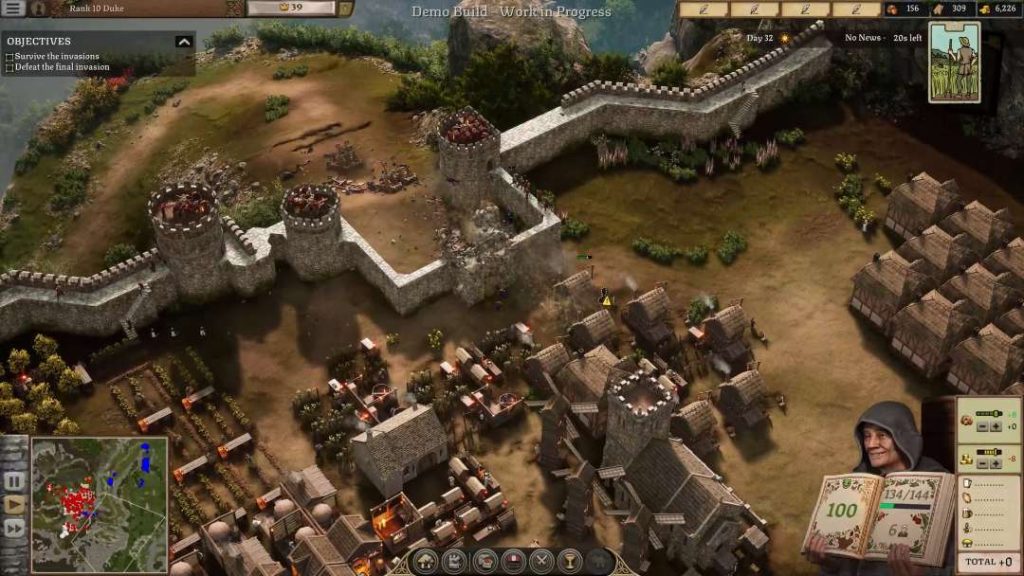
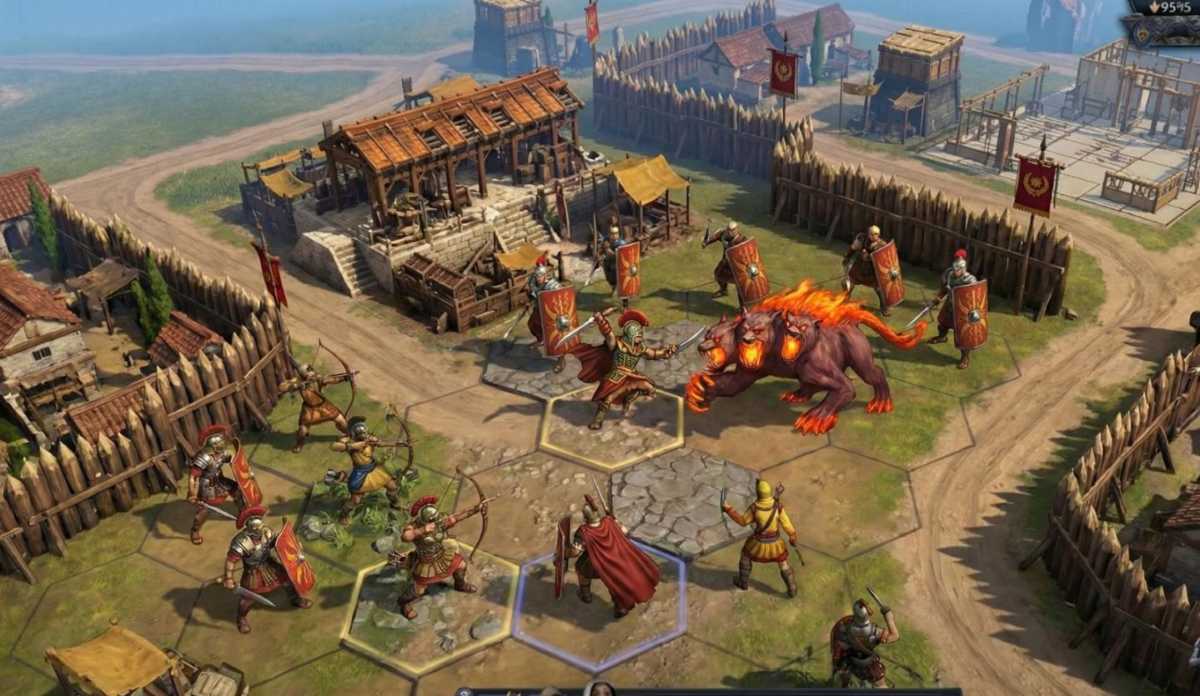
Stronghold 4 takes the series back to medieval England and the castle-simulation formula that made its earlier games famous.
Set before the original Stronghold, its campaign follows Penryn of Wethel, a shepherd who is forced into leadership during a period of war and political instability.
You will manage food, taxes, honor, and peasant happiness while constructing walls, towers, traps, moats, and the economy needed to support an army.
Weather will also affect both settlement management and warfare, with snow slowing crop production and heavy rain reducing the effective range of archers.
The planned Early Access version includes a 22-mission campaign, skirmishes against eight computer-controlled lords, a skirmish trail, and Free Build mode, while a demo is already available.
Why it stands out: Stronghold 4 brings weather and seasonal pressure into the familiar balance between castle construction, civilian management, and military defense.
Join the Insider List.
Get finished gameplay reveals, development updates, and early notice when the polished demo is ready.
No spam. Unsubscribe anytime.17. Anvil Empires
Release: Upcoming, date TBA
Subgenre: Persistent-world massively multiplayer warfare
Best for: Players who want large wars shaped entirely by other players
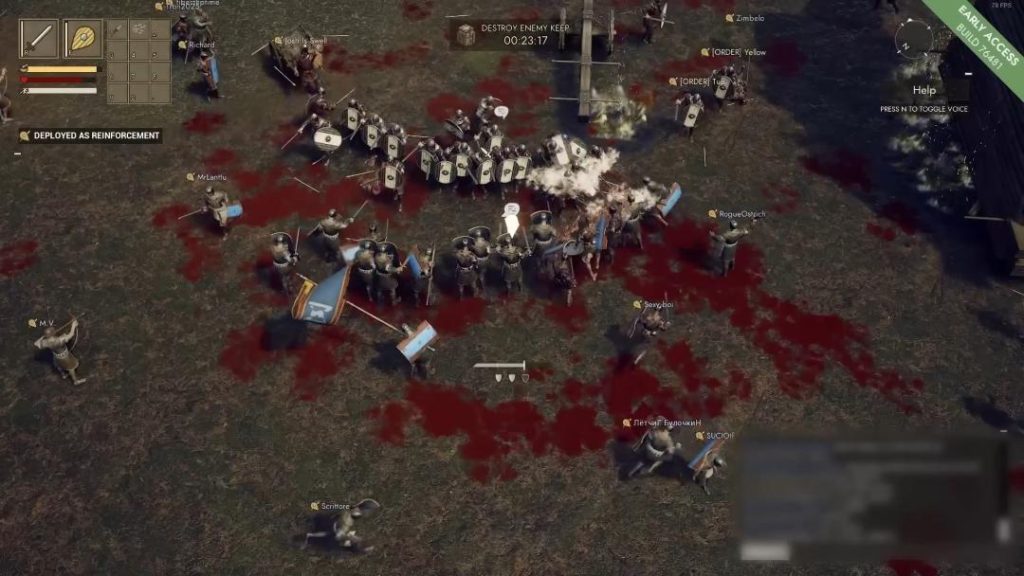
Anvil Empires turns medieval warfare into a persistent online conflict where soldiers, builders, farmers, traders, and suppliers are all controlled by real players.
Campaigns can continue for weeks, with thousands of players contributing to the same shared world and as many as 1,000 participating in one real-time battle.
Not everyone needs to fight on the front line.
Players can gather resources, raise animals, build settlements, manufacture equipment, transport supplies, or construct large fortresses that may take days to complete.
Major armies also depend on food, weapons, siege camps, ladders, and battering rams, making logistics just as important as combat.
Why it stands out: Few medieval games attempt persistent warfare at this scale, where every sword, wall, and shipment is produced by the player community.
16. Band of Crusaders
Release: Upcoming, date TBA
Subgenre: Dark medieval strategy RPG with real-time combat
Best for: Players who enjoy Battle Brothers-style squad management
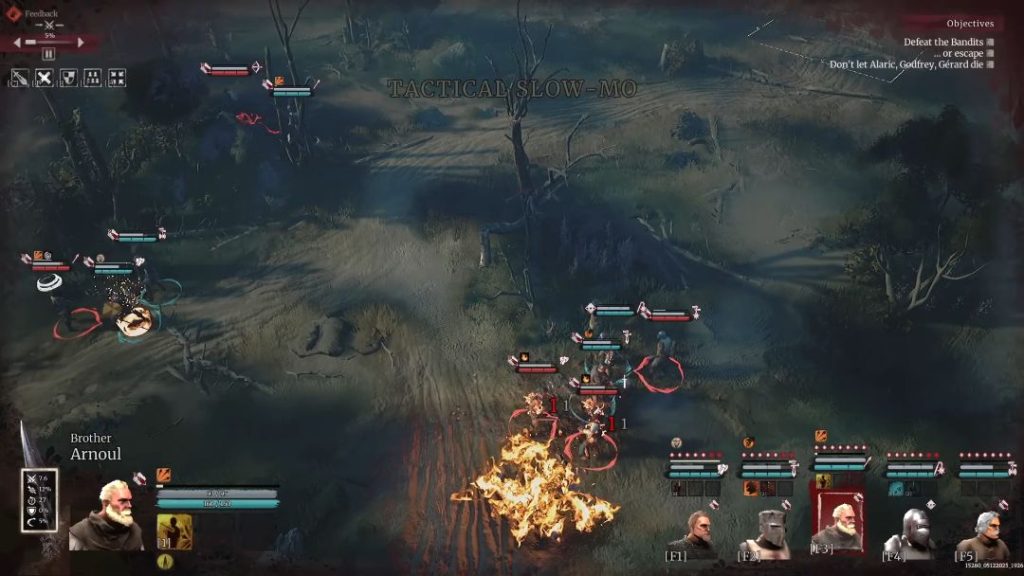
Band of Crusaders places you in charge of a knightly order defending a dark version of medieval Europe from a spreading demonic invasion.
You travel through a changing strategic map, recruit and train crusaders, manage equipment, and decide which threats your order can realistically confront.
Combat takes place in real time but can be slowed down, giving you greater control over formations, abilities, positioning, and the way your knights support one another.
Your roster can grow to 20 fighters, but permanent death means a poorly handled battle may cost you a veteran knight permanently.
Between encounters, your camp provides facilities for healing, training, recruitment, repairs, and preparation for the next expedition.
Why it stands out: The combination of permanent losses, camp management, and a changing demonic invasion gives every campaign the potential to develop differently.
15. The Guild – Europa 1410
Release: Upcoming, September 2026, Early Access
Subgenre: Medieval economic and dynasty simulation
Best for: Players who prefer medieval power struggles without constant warfare
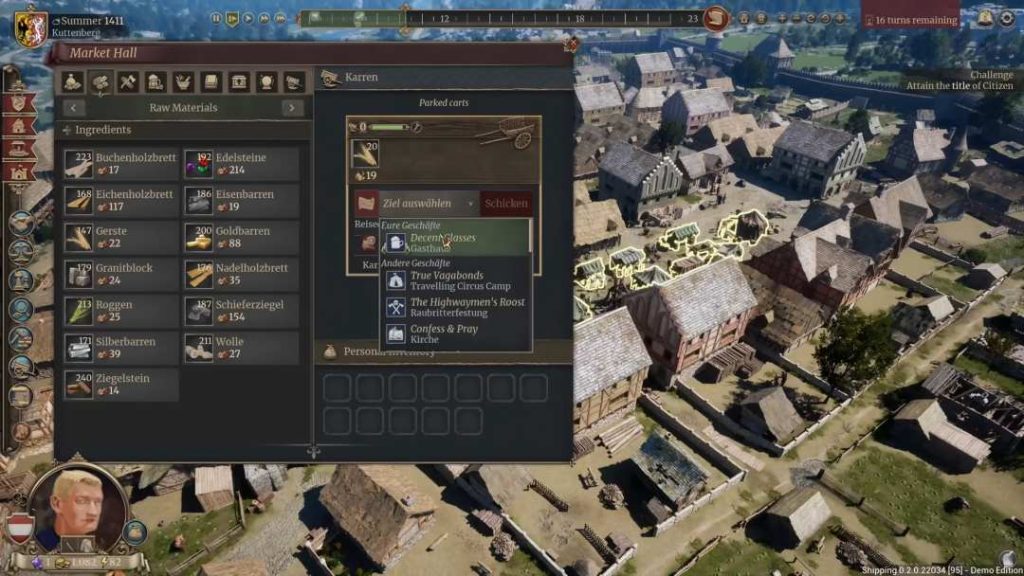
The Guild – Europa 1410 focuses on building a family dynasty inside a late-medieval European city.
You begin with a modest business before producing goods, establishing trade, marrying, raising heirs, and turning financial success into political influence.
Available professions include blacksmiths, alchemists, tailors, preachers, and thieves.
Criminal characters can rob, kidnap, blackmail, and pickpocket their rivals, while law-abiding families can patrol the streets, collect evidence, and pursue positions in public office.
The initial Early Access version is expected to contain four cities and 11 professions, with single-player available first and multiplayer planned during development.
Why it stands out: Success is measured through wealth, family influence, reputation, and political control rather than simply conquering territory.
14. Diplomacy Is Not an Option
Release: October 4, 2024
Subgenre: Survival RTS, base building, and tower defense
Reviews (Steam): Very Positive, 10,700+ total (≈86% positive).
Best for: Players who want to defend fortresses against enormous armies
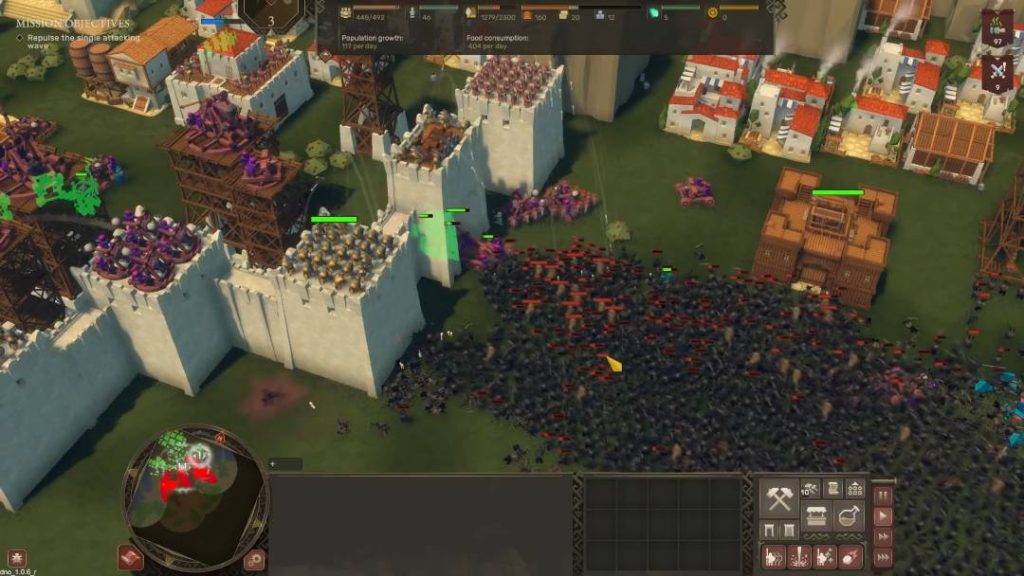
Diplomacy Is Not an Option challenges you to build a functioning medieval settlement while preparing it to survive attacks involving tens of thousands of enemies.
Walls, towers, farms, houses, barracks, and siege weapons all compete for limited workers and resources.
Projectiles follow the game’s physics, so towers need good lines of sight and walls must be positioned carefully if your archers and catapults are going to remain effective.
The campaign includes branching decisions involving a peasant rebellion, while later encounters introduce undead armies and battlefield magic.
Outside the story, the game offers Endless, Challenge, and Sandbox modes alongside a map editor.
Why it stands out: Its scale turns every defensive layout into a spectacle, but a poor economy can destroy your kingdom long before the largest waves arrive.
13. Thronefall
Release: October 11, 2024
Subgenre: Minimalist action RTS and tower defense
Reviews (Steam): Overwhelmingly Positive, 22,700+ total (≈96% positive).
Best for: Players who want meaningful strategy without a lengthy campaign
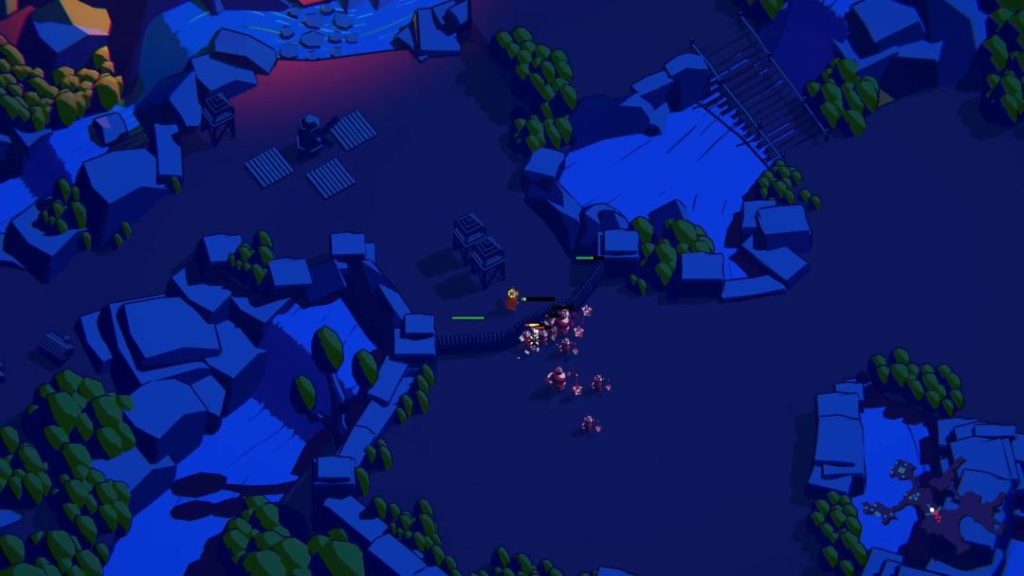
Thronefall removes much of the complexity associated with medieval strategy while preserving the decisions that make kingdom builders satisfying.
During the day, you spend limited gold on houses, farms, mines, defensive walls, towers, soldiers, and permanent upgrades.
When night arrives, you ride into battle, direct your troops, and personally defend the center of your kingdom.
Its ten maps introduce different landscapes, weather conditions, enemies, and economic problems.
Weapons, perks, unit compositions, and optional difficulty modifiers also give you several ways to alter each attempt.
Why it stands out: Thronefall delivers the economy and defense cycle of a larger strategy game in short sessions that rarely feel repetitive.
12. Knights of Honor II: Sovereign
Release: December 6, 2022
Subgenre: Real-time medieval grand strategy
Reviews (Steam): Mostly Positive, 4,900+ total (≈77% positive).
Best for: Players looking for an approachable alternative to denser grand strategy games
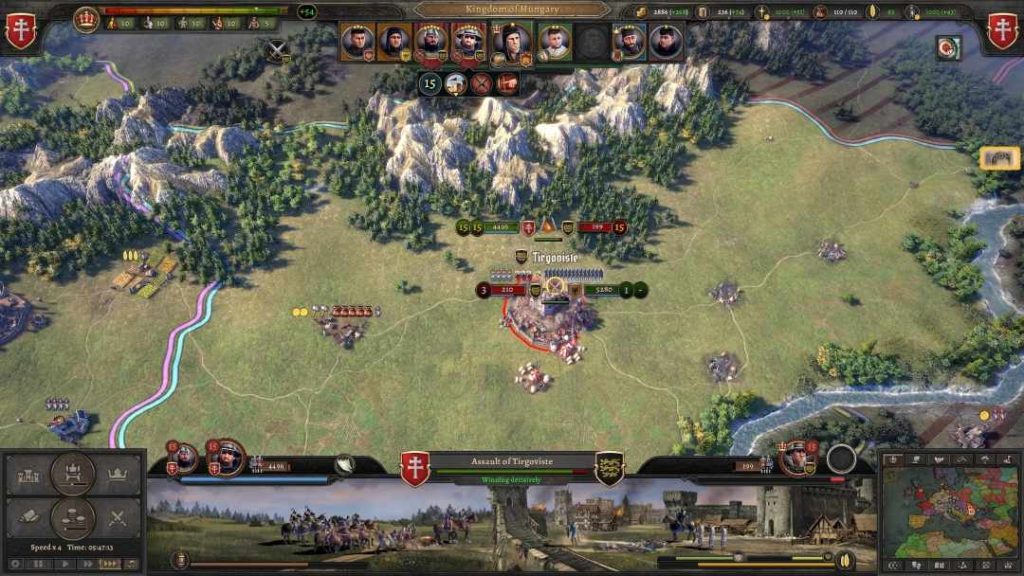
Knights of Honor II: Sovereign lets you rule more than 200 kingdoms across Europe, North Africa, and parts of Asia.
Its campaign progresses in real time as you manage provinces, armies, diplomacy, religion, trade, espionage, and the members of your royal court.
Marshals can command armies, merchants can strengthen trade, diplomats can negotiate agreements, clerics can influence religion, and spies can interfere with rival kingdoms.
When war begins, you can either leave the outcome to your commanders or personally control field battles and sieges.
Multiplayer supports up to six players across cooperative, team-based, and free-for-all matches.
Why it stands out: It provides the scale of medieval grand strategy while keeping the interface and kingdom management relatively approachable.
11. Norland
Release: July 18, 2024, Early Access
Subgenre: Medieval colony sim with political and family management
Reviews (Steam): Very Positive, 8,700+ total (≈82% positive).
Best for: Players who enjoy emergent stories and unpredictable rulers
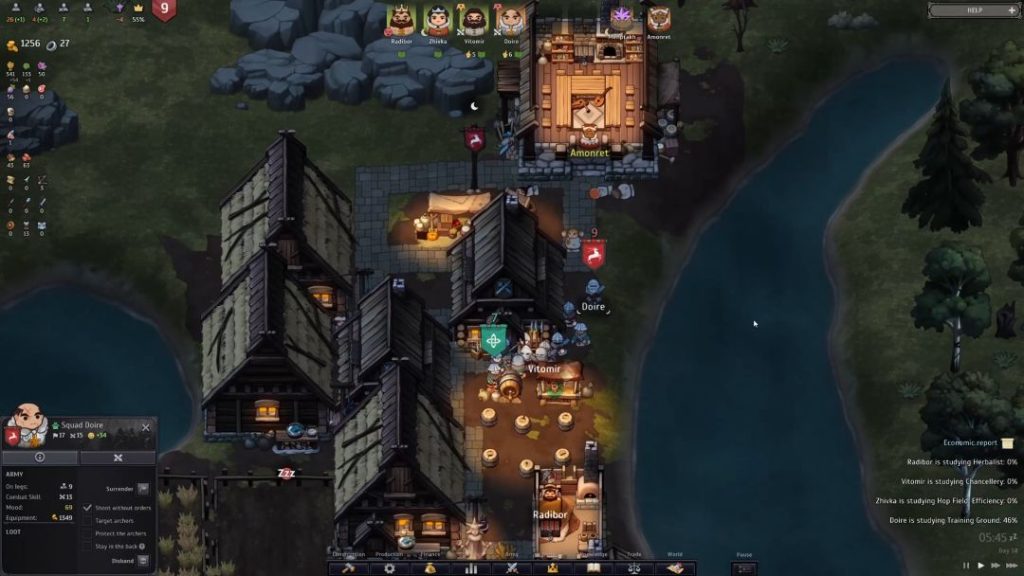
Norland combines colony management with the personal and political drama of a noble family.
Every member of the ruling household has individual skills, desires, relationships, grudges, and ambitions.
They may fall in love, betray relatives, develop addictions, murder rivals, lead armies, or destabilize the entire kingdom because of a personal conflict.
Knowledge also belongs to individual nobles, meaning valuable technology may disappear when its owner dies unless it was recorded or passed to another character.
Beneath these family stories, you still need to manage workers, production, religion, trade, class tension, diplomacy, and warfare.
Why it stands out: Norland makes the personalities inside your ruling family as dangerous as enemy armies or a collapsing economy.
10. The King Is Watching
Release: July 21, 2025
Subgenre: Roguelite kingdom builder
Reviews (Steam): Very Positive, 8,800+ total (≈89% positive).
Best for: Players who want compact campaigns with an unusual central mechanic
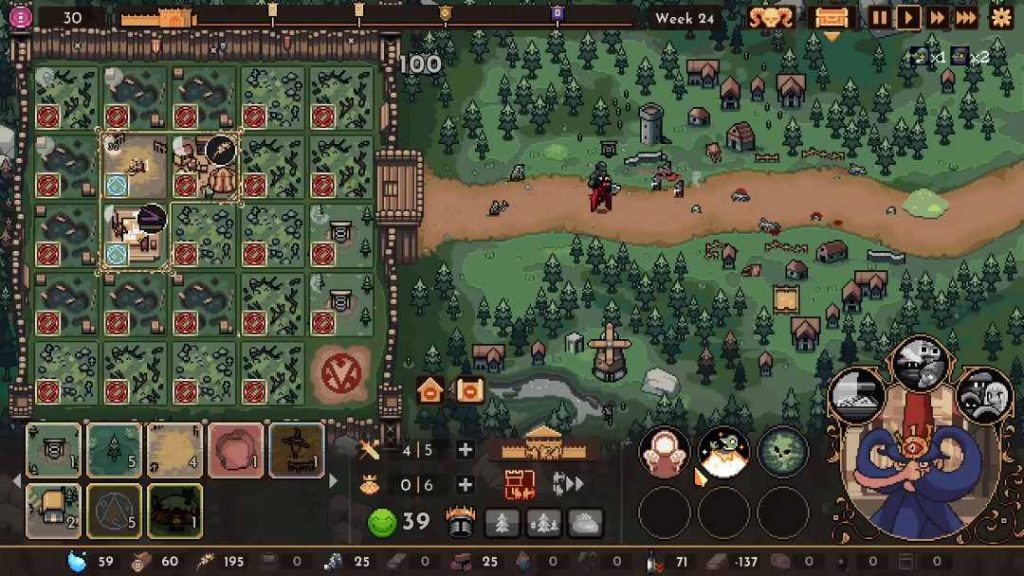
The King Is Watching builds its kingdom management around a single rule: buildings only function while the king is looking at them.
Your limited field of vision can cover only part of the settlement, forcing you to choose between food production, mining, military training, repairs, and other urgent tasks.
Those resources support an expanding defense made up of walls, archers, magic, and other tools needed to survive increasingly dangerous enemy waves.
Each region introduces new threats and commanders, while failed attempts provide progress that can support future runs.
Why it stands out: Attention becomes a limited strategic resource, turning even basic economic decisions into a constant balancing act.
9. Foundation
Release: January 31, 2025
Subgenre: Gridless medieval city builder
Reviews (Steam): Very Positive, 22,800+ total (≈87% positive).
Best for: Players who want relaxed settlements that grow organically
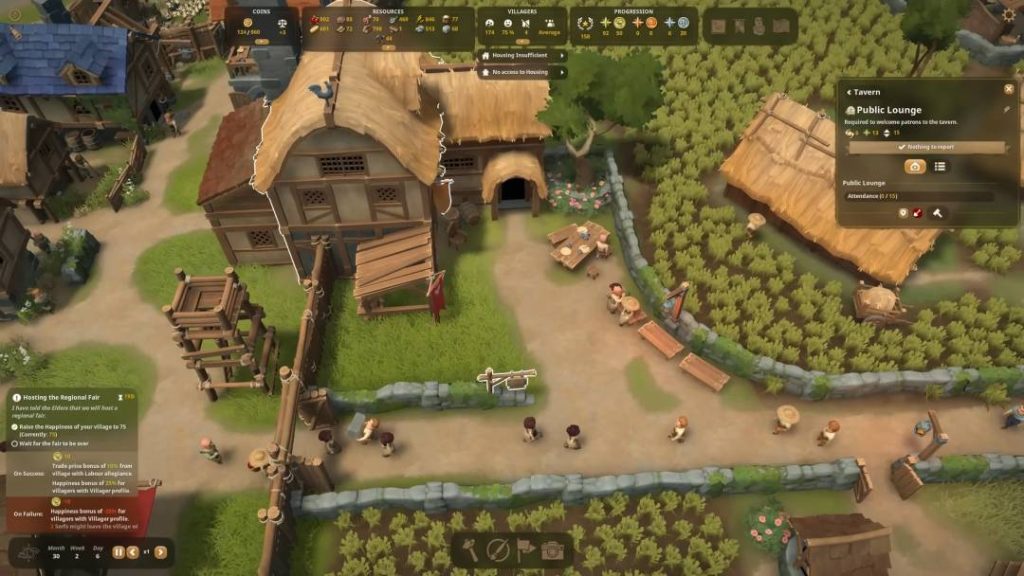
Foundation allows villages to develop around the landscape instead of forcing every road and building into a fixed grid.
You designate housing, resource, work, and patrol zones before watching villagers form paths and settle around them.
Churches, manors, monasteries, and other major structures are modular, letting you assemble them piece by piece.
The wider economy includes jobs, trade, taxation, production chains, and three competing Estates representing Labor, Clergy, and Kingdom.
Difficulty settings, generated maps, creative options, and mod support allow the experience to range from a calm construction game to a demanding management challenge.
Why it stands out: Few medieval city builders produce settlements that look this natural without asking the player to place every road and household individually.
8. City Tales: Medieval Era
Release: January 29, 2026
Subgenre: Gridless medieval city builder with companion management
Reviews (Steam): Very Positive, 500+ total (≈90% positive).
Best for: Players who enjoy attractive settlements and character-led progression
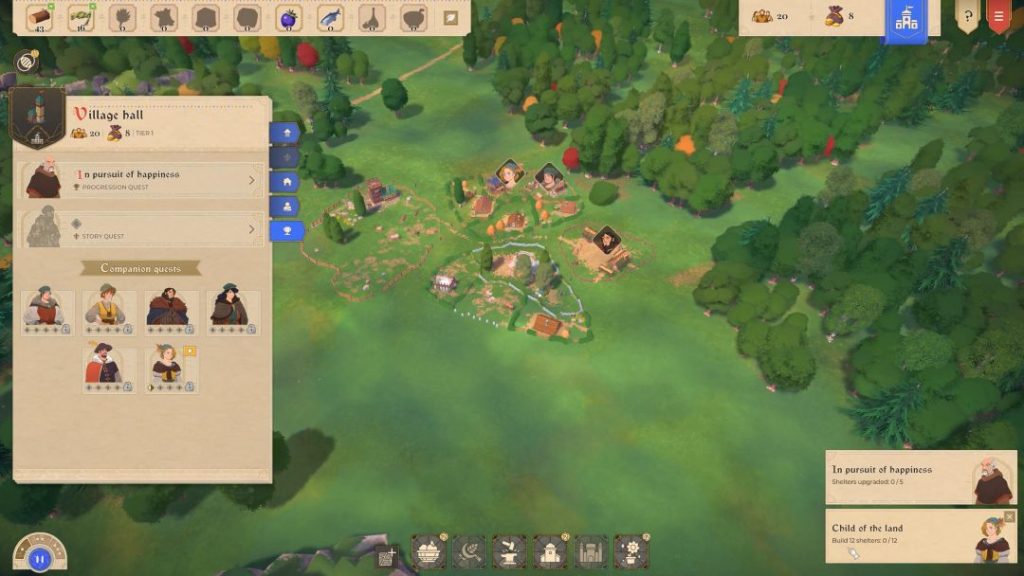
City Tales: Medieval Era connects the growth of your city with the stories of nine companions.
Rather than placing every structure on a rigid grid, you create broad districts that develop according to the people living within them.
One neighborhood may require a lively tavern, while another may prefer access to a quiet church.
Companions can supervise important production sites, gain experience, provide useful bonuses, and introduce personal storylines as the settlement expands.
The game currently includes two large maps and emphasizes organic city design, decoration, economic planning, and a relatively relaxed pace.
Why it stands out: Companions give the city more personality and connect individual stories with wider economic development.
7. Going Medieval
Release: March 17, 2026
Subgenre: Medieval colony sim, survival strategy, and castle building
Reviews (Steam): Very Positive, 16,900+ total (≈89% positive).
Best for: Players who want detailed multi-level construction
Going Medieval begins with a small group of survivors attempting to rebuild society after a devastating plague.
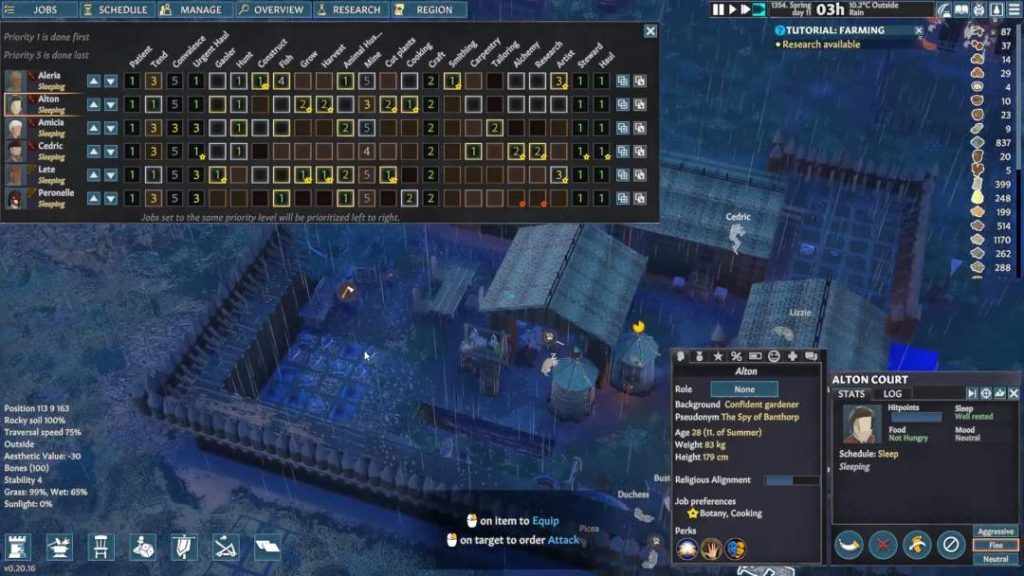
Its three-dimensional building system supports multi-storey castles, underground chambers, workshops, chapels, libraries, defensive walls, and traps.
Every settler has individual skills, beliefs, preferences, and personal needs that influence the jobs and combat roles they perform best.
Food, shelter, temperature, production, and morale require constant attention, while raids and dangerous animals force the colony to maintain weapons and defenses.
After several years in Early Access, the game reached its full release on March 17, 2026.
Why it stands out: Building both upward and underground gives its castles far more structural freedom than those found in most colony simulators.
6. Stronghold Crusader: Definitive Edition
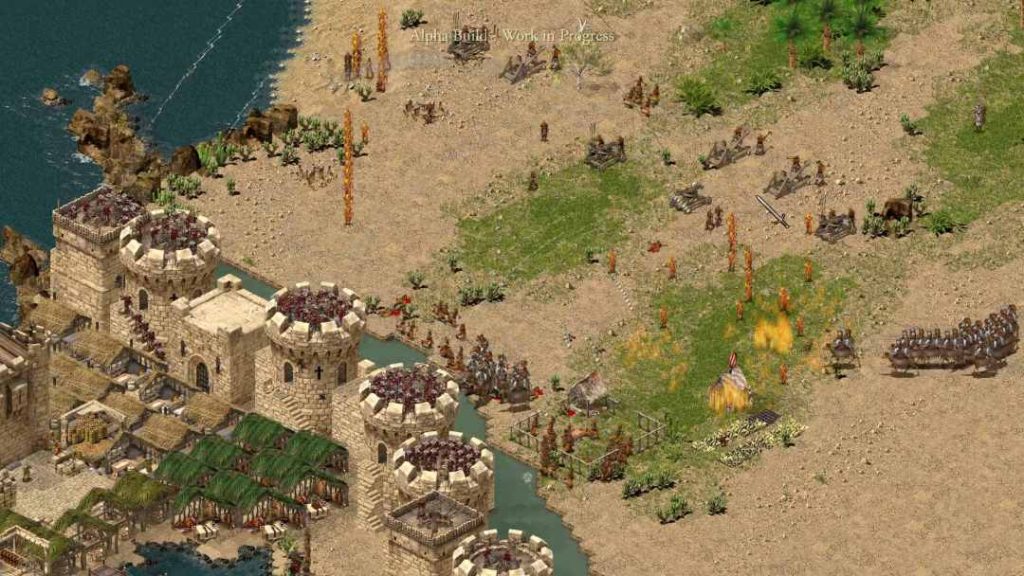
Release: July 15, 2025
Subgenre: Castle simulator and real-time strategy
Reviews (Steam): Very Positive, 10,400+ total (≈92% positive).
Best for: Players who want traditional Stronghold skirmishes and multiplayer sieges
Stronghold Crusader: Definitive Edition updates the original desert castle simulator while retaining its fast economy and aggressive siege warfare.
The expanded edition adds eight units, four computer-controlled opponents, two historical campaigns, four skirmish trails, larger maps, and Steam Workshop support.
Players can face 20 distinct enemy lords, each with recognizable castle layouts, army compositions, and battlefield behavior.
A new cooperative trail allows two players to face shared challenges, while online matches support battles involving as many as eight participants.
Why it stands out: It preserves the speed and personality of the original while adding enough new opponents, campaigns, and multiplayer content to justify returning.
5. Farthest Frontier
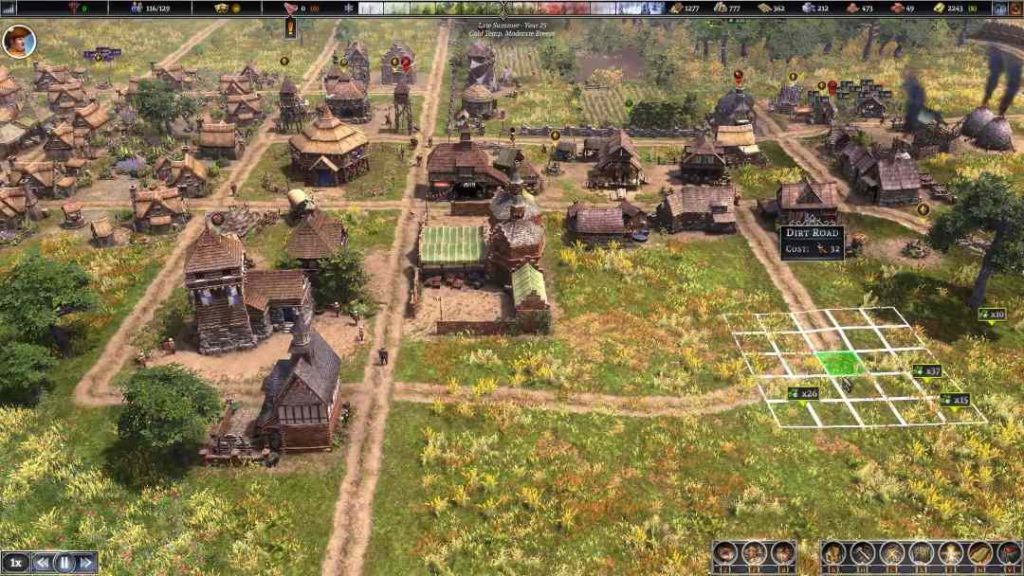
Release: October 23, 2025
Subgenre: Survival city builder
Reviews (Steam): Very Positive, 24,200+ total (≈86% positive).
Best for: Players who enjoy detailed agriculture, logistics, and long-term planning
Farthest Frontier challenges a small group of settlers to build a safe and sustainable town in an unsettled wilderness.
Its economy contains more than 190 buildings and a technology tree with over 140 entries.
Farming is especially detailed, with crop rotation, soil fertility, frost, heat, weeds, rocks, and plant diseases all affecting the harvest.
Food can spoil without proper storage, while dirty water and poor living conditions can allow illness to spread through the population.
Combat can be reduced or removed through pacifist settings, while higher difficulties add raiders, invading armies, soldiers, towers, and fortified walls.
Why it stands out: Few medieval city builders treat farming, food storage, health, and transportation with this much detail.
4. Tabletop Tavern
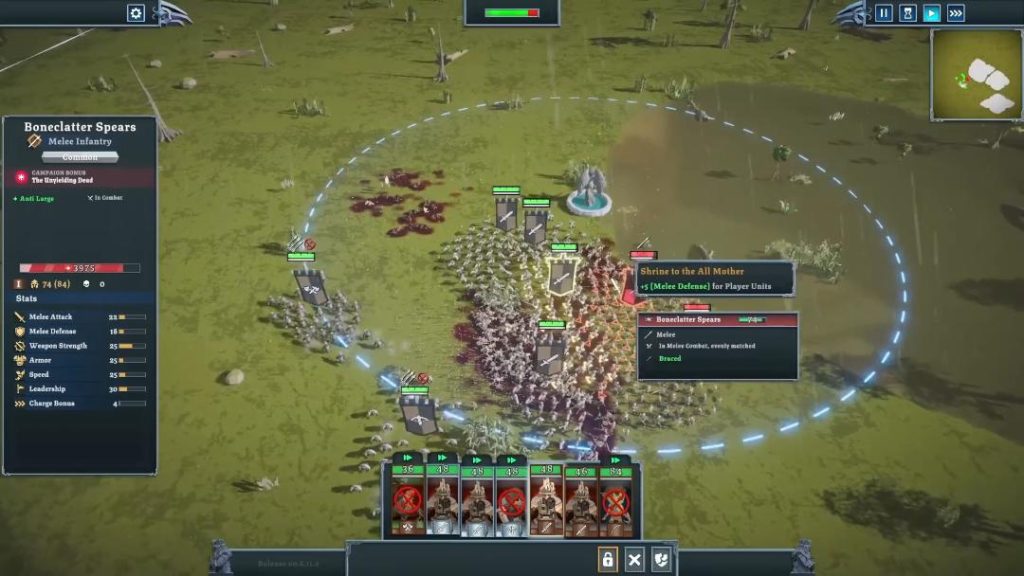
Release: June 11, 2026
Subgenre: Roguelike real-time strategy
Reviews (Steam): Very Positive, 1,900+ total (≈90% positive).
Best for: Players who enjoy experimenting with different armies across repeated campaigns
Tabletop Tavern presents its fantasy armies as miniatures fighting across the tables of a medieval inn.
Each campaign begins with a small force before sending you through a branching sequence of battles, recruitment opportunities, equipment choices, and other events.
Spearmen can stop cavalry charges, archers need protection from flanking units, and terrain can decide fights before the two armies fully engage.
Available factions include humans, Vikings, elves, dwarves, orcs, trolls, and giants, each supporting different battlefield plans.
A failed campaign sends you back to begin again with a new force and different unit combinations.
Why it stands out: It combines the army management of a large strategy campaign with the replayable structure of a roguelike.
3. Legends of the Round Table
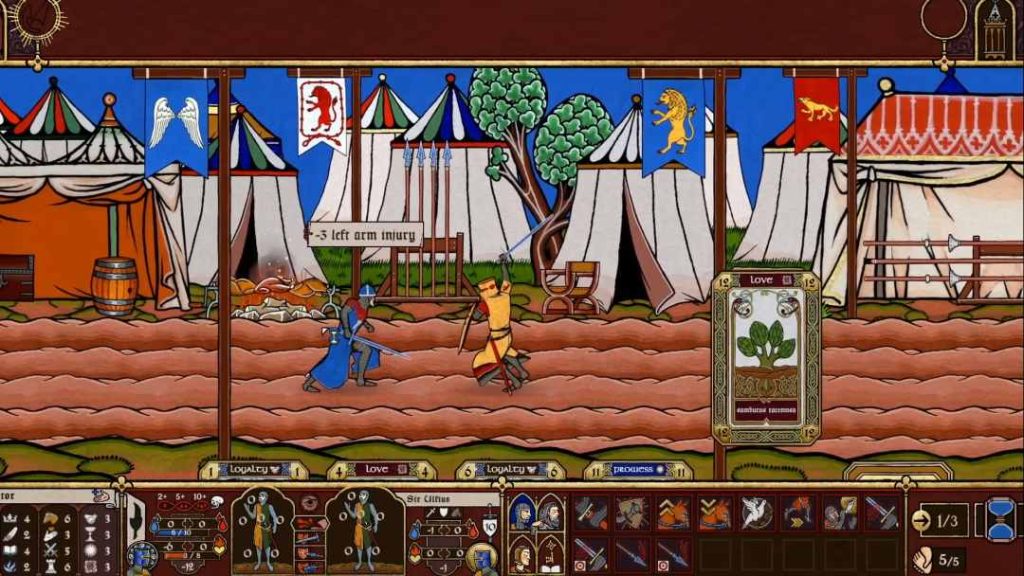
Release: March 31, 2026
Subgenre: Arthurian CRPG with turn-based tactics
Reviews (Steam): Very Positive, 100+ total (≈90% positive).
Best for: Players who value strong storytelling, historical art, and permanent consequences
Legends of the Round Table places you in charge of more than a dozen knights drawn from Arthurian legend.
You decide who earns a place at the Round Table, select knights for dangerous quests, and respond to choices involving honor, punishment, mercy, romance, and rivalry.
Turn-based battles include lance charges, squires, weapon changes, prisoners, and permanent character losses.
Its hand-drawn presentation follows methods associated with thirteenth-century manuscript art, while the soundtrack draws from period music and historical instruments.
Why it stands out: The medieval manuscript presentation is closely connected to its setting rather than being a decorative filter placed over a conventional tactics game.
2. Valor of Man
Release: March 19, 2026
Subgenre: Turn-based roguelite RPG with tactical combat
Reviews (Steam): Very Positive, 100+ total (≈89% positive).
Best for: Players who enjoy party building and testing different combat combinations
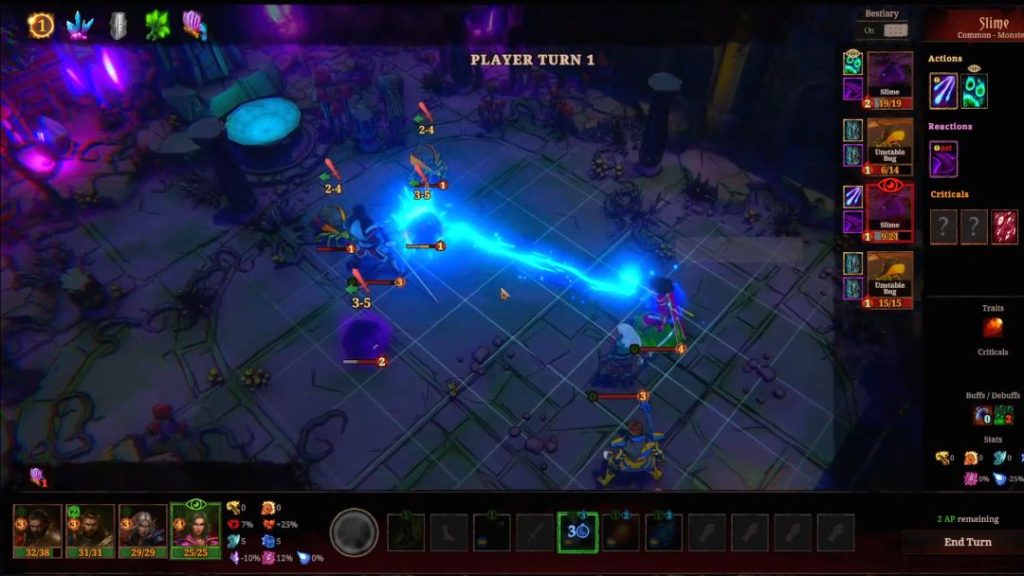
Valor of Man turns a fantasy campaign into replayable tactical runs built around a party of four heroes.
You choose characters from 12 classes, combine class variants with equipment, and progress through procedurally generated chapters containing battles, rest points, risks, and rewards.
Combat uses limited action points and reaction mechanics, meaning one attack can immediately change the options available to both sides.
Repeated runs provide new classes, equipment, abilities, artifacts, and higher difficulty settings.
Across these categories, the game contains more than 700 possible abilities, items, and artifacts.
Why it stands out: Its large pool of classes, equipment, and reactions gives players a strong reason to test new party setups across multiple runs.
1. Manor Lords
Release: April 26, 2024, Early Access
Subgenre: Medieval city builder with real-time tactical battles
Reviews (Steam): Very Positive, 75,400+ total (≈84% positive).
Best for: Players who want settlement management and large battles in one grounded medieval campaign
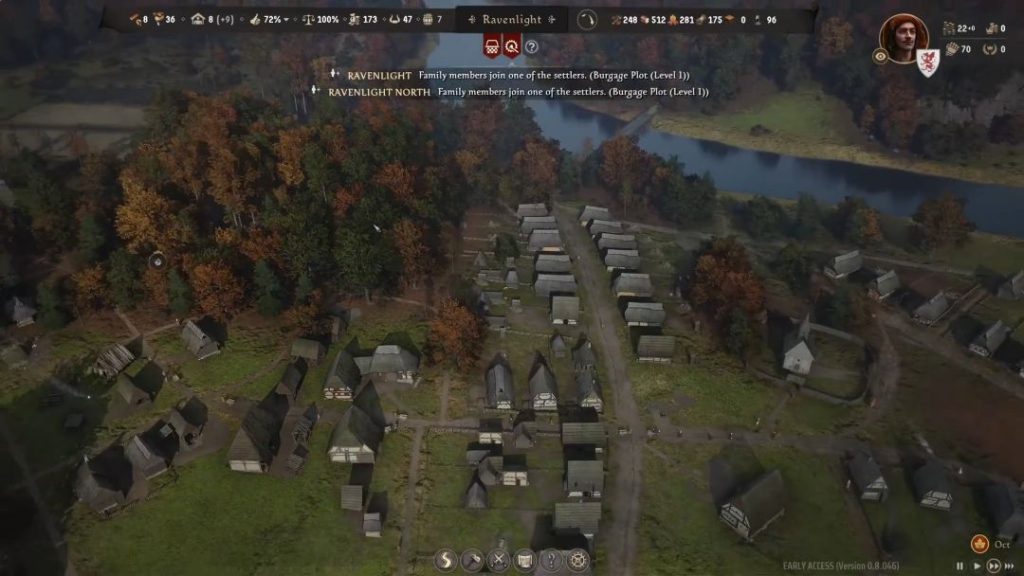
Manor Lords combines organic city building, regional economics, and real-time warfare inside a setting inspired by late-fourteenth-century Franconia.
Settlements form around roads, terrain, fertile land, forests, and residential plots rather than following a rigid grid.
Individual families can grow vegetables, keep animals, perform specialized jobs, and support production chains that turn raw resources into trade goods, weapons, and armor.
When conflict begins, militia units fight in large tactical battles where terrain, weather, formations, equipment, fatigue, and positioning all matter.
The game remains in Early Access, with further economic, military, and political systems still under development.
Why it stands out: Manor Lords provides the strongest overall combination of grounded settlement building, economic management, and medieval warfare on this list.
Join the Insider List.
Get finished gameplay reveals, development updates, and early notice when the polished demo is ready.
No spam. Unsubscribe anytime.Conclusion
The right choice ultimately depends on which part of medieval strategy interests you most.
Choose Manor Lords for a broad combination of city building and battles, Farthest Frontier for survival management, Stronghold Crusader: Definitive Edition for castle warfare, or Knights of Honor II: Sovereign for grand strategy.
Among the upcoming games, Stronghold 4 is the clearest choice for traditional castle simulation, while Anvil Empires could offer something far larger for players interested in persistent online warfare.
If you liked this best medieval strategy games list, we’d recommend checking out our list of the best indie grand strategy games.